Carole Excell Dan Duguay Billy Adam By Tad Stoner First legislated on 31 August 2007, the long-awaited bill enables the public to seek information on any subject from any government entity, and obligates government to respond, usually within one month of the request. “It takes the member of the public acting on their rights to enforce their right to know,” said Ms Excell. “It’s up to people to make [the law] work. “It makes the Government more transparent and accountable. Members of the public have the right to access public records and it helps you make decisions. If you want to know how your country runs, you want to participate in that and you care about your country, you need access to information. It enables you to make informed decisions.” She said the legislation was not limited to Caymanians. “Everyone who lives here has an interest,” she said. “For example: Why are you sending your children to one school if you don’t know how it is run or how the others are run? What are your rights as a tenant? You need to find out what the rules are, even if there are rules at all, and then demand that there be rules if there are none.” Commenting on the long-awaited FOI Law, Auditor General Dan Duguay, charged with scrutinising Government value-for-money transactions, said the promulgation of the new law was critical. “I think it’s a great thing,” he said, “a great thing for the Cayman Islands. My office is all about accountability; that is what we do, and I strongly support this a way for people to get the information they want.” He said his office was unlikely to need the FOI law because it already had full access to government records. “We are in the information game, and I have never had any problem getting information myself because that’s what we do. FOI is much more for others; it’s a great thing.” Social commentator and local activist Billy Adam greeted the new law with a mixture of relief and hope. “The proof will be in the pudding, to see how much they actually are going to release,” he said, but lauded the efforts of the ruling People’s Progressive Movement (PPM) and its political chief, Leader of Government Business Hon Kurt Tibbetts, almost single-handedly responsible for realising the legislation. “The PPM has got to be congratulated for getting this through,” he said. “They followed through, and kept their campaign promise. “This ushers in a whole new era of participatory democracy,” he said, referring to a proposal in the draft of the new Cayman Islands constitution to allow ‘people’s referendums’ on a variety of issues. “With the constitutional proposals still to be seen, and in order for people to make informed decisions, it is necessary to have information.” Mr Adam said that already he had, ahead of today’s activation of the law, filed two FOI requests “with four or five more to go”. One, he said, would be an enquiry about the lack of operating licences at the new West Bay and Morgan’s Harbour dolphin facilities; another would seek to learn what the Attorney General knew about laws governing operations at the attractions. “I want to see comments on the new Conservation Law being held up; I want full details on the CITES [the United Nation’s Convention on International Trade in Endangered Species] information on the capture of the dolphins; and I will ask the Ministry of Planning why we don’t have an overall development plan. “I will also ask about Vision 2008 and what discussions have taken place in government about it,” he said. Ms Excell said she expected an initial flurry of requests, and a few administrative “teething problems”, but anticipated it would settle down shortly. “We will probably get more requests in the first month, and then by, say, the end of January, we’ll see what agencies are getting the most requests. At first, people may not provide sufficient information to enable managers to identify what information they want, and then people may not get the required response in the time frame they expected.” Historically, she said, the bulk of requests went to ministries of finance and treasury as people sought financial records; to immigration and health departments for personal records; and to the police and departments of the environment – “especially with the dolphins coming in”. She acknowledged fears that officials could hide behind the law, exploiting the mandated time frames for responding to requests. “We have to change a culture and sensitise pubic officials, make sure they understand and are making their preparations and doing their record surveys so they know what records they even have. People only started to take this seriously recently,” she said. Ms Excell said she was poised to file two requests of her own today. “I just want to know how a couple of things work, why they are they way they are,” she said, declining, however, to elaborate. “What we’re trying to explain is that FOI is for information that they have not already supplied. It’s not about answers on a telephone, but about seeing records on request. It’s more formal and is about government responding within the period of the law – and within the spirit of the law,” she said.Freedom of Information Law set Published on Sunday, January 4, 2009 Source: http://www.caymannetnews.com/news-12602--1-1---.html 


Freedom of Information (FOI) Coordinator
Auditor General
Businessman
tad@caymannetnews.com
Pronouncing herself “ready to go”, Freedom of Information (FOI) Coordinator Carole Excell – and 89 Information Managers throughout Government – on Monday morning will usher in the Cayman Islands first guarantee of public access to official records.
PARTICIPATORY DEMOCRACY vs REPRESENTATIVE DEMOCRACY
Over the decades, our representative democracy has been systematically undermined and has ultimately failed in preserving the well being of the people of this nation. The system that the founding fathers painstakingly devised in order to best serve the interests and the will of the people has been corrupted and the systems of checks and balances on power that they instituted have been stripped away. Most of us accept this reality as being beyond our control and continue to observe, comment, and complain without aspiring to achieving any real change, without any hope of instituting a new system of governance that would instead take directly into account your views, and the views of your neighbors, and would empower you to make real positive change possible in your communities.
This site will attempt to explore in depth the places in the world where people are successfully bringing about that type of change in the face of similar odds, where an alternate form of democracy, which is called participatory or direct democracy, is taking root. Initiative, referendum & recall, community councils, and grassroots organizing are but a few ways in which direct/participatory democracy is achieving great success around the world.
Our system of representative democracy does not admit the voice of the people into congressional halls, the high courts, or the oval office where our rights and our liberties are being sold out from underneath us. Our local leaders and activists in our communities, and even those local elected officials who may have the best of intentions are for the most part powerless to make real positive change happen in our neighborhoods, towns and villages when there is so much corruption from above.
In places like Venezuela, Argentina, Bolivia, Nicaragua, Ecuador, Brazil, South Africa, India, and the Phillipines, new experiments in grass roots community based governance are taking place. There is much to be learned from these and other examples of participatory democracy from around the world when we try to examine how this grass-roots based governance could begin to take root here in our own country in order to alter our political system so that it might better serve the American people.
In the hope that one day we can become a nation working together as a united people practicing true democracy as true equals, we open this forum…
Friday, February 13, 2009
CAYMAN ISLANDS: A Step toward Transparent Democracy
Posted by
Democracy By The People
at
8:52 AM
0
comments
Links to this post
Labels: CARIBBEAN, Cayman Islands, Transparency
Sunday, January 25, 2009
PERU: Desarrollo Local con Democracia en Santo Domingo
PRIMERA PARTE:
SEGUNDA PARTE:
TERCERA PARTE:
Posted by
Democracy By The People
at
6:53 PM
0
comments
Links to this post
Labels: Consejos Comunales, Democracia Participativa, LATIN AMERICA, PERU
Youth Participate in Salvadoran Electoral Process
The following article co-written by one of our editors currently in El Salvador highlights the role of youth participation in improving the electoral process in that country. - Editor
Youth Demand Transparency as El Salvador Prepares Municipal and Legislative Elections
by Alexandria Soleil and Maggie Von Vogt
Source: http://narcosphere.narconews.com/notebook/maggie-von-vogt/2009/01/youth-demand-transparency-el-salvador-prepares-municipal-and-legisl
On January 18, 2009, El Salvador will hold its sixth municipal and legislative elections since the 1992 signing of the Peace Accords. This year national politicians and international officials are aiming for the most transparent and clean to date, but popular sectors criticize the electoral system and predict that past problems are likely to occur again. A September 2008 poll executed by the University Institute of Public Opinion at Central American University José Simeon Cañas (IUDOP) found that 55% of those surveyed believe there will be fraud in January’s election.
Two activists from Equipo Mapache (Raccoon Team), a youth independent radio collective, show that young people who participate in the electoral process are conscious and critical of such problems. Sabino and Daniel recounted some of their first-hand experiences in order to illuminate the greater problems facing the electoral system in El Salvador. “There is not democracy in El Salvador. What exists is arbitrariness for the election of certain public officials. It would be much better if a decentralized, citizen-powered organism managed the question of popular will,” said Daniel. While critiquing the system, they also imagine possibilities for the development of a more transparent electoral system that would be more accountable to voters.
Youth Participation
Starting out as a teenager serving lunch and coffee to the people running the polls, later directing mobs of voters to their assigned voting center, and finally serving as a vigilante (active observer) for the FMLN party, Sabino became more involved in El Salvador’s elections each time they were held. “You just go get one of those instruction packets, the electoral code, and even if you’re young and bored you are at least in contact with it,” he said of his experience as a youth on the supportive fringes of the FMLN, the leftist former guerrilla party.
While he and other Equipo Mapache activists never joined a brigade or became party militants, he found that working through a political party is the primary way in which to participate in Salvadoran electoral politics. “We have never been party militants, but for different reasons we have always been close to, been tied to, the party, to the basic structure of the party…. In that way we have achieved becoming part of the party, part of that experience and part of everything that the elections involve,” said Sabino.
Daniel volunteered as a national observer in the 2006 municipal and legislative elections, working with one of the few non-governmental law organizations within the country that studies and critiques the electoral process. In a system that depends upon political parties to organize and execute the electoral process, the non-partisan view that Daniel found at The Human Rights Institute at the Central American University (El Instituto de Derechos Humanos de la UCA, IDUCA) is key in providing a non-party presence that fosters transparency. Daniel turned his observations in to IDUCA who in turn reported to the Inter-American Commission on Human Rights (La Comisión Interamericana de Derechos Humanos). This commission is one of many that uses reports from observers to provide Salvadoran electoral and governmental bodies with recommendations to improve the electoral system.
Political Parties in the Electoral Process
The signing of the Peace Accords transitioned the 12 year long armed conflict between leftist guerillas and the US-backed national military to a battle between political parties. Since then, the leftist Farabundo Marti National Liberation Front (FMLN) and right wing Republican Nationalist Alliance (ARENA) have been the two main political parties. While ARENA has held the presidency since 1992, the FMLN currently maintains nearly half of the National Assembly and the mayor of the capital city San Salvador.
Many people, like Sabino, become involved in the electoral process due to family party affiliations. Meanwhile, party members and militants are recruited to serve on one of the temporary electoral boards that organize the elections on departmental and municipal levels, or to sit at the table where votes are authorized and counted. These people who dedicate their time and ideology to the party are trained by the party itself to defend party interests leading up to, and on, Election Day.
The political parties in El Salvador are represented in each of the hierarchically ordered bodies of the electoral system. Each body, starting at the national level with the Supreme Electoral Tribune (TSE) and followed by its municipal and departmental entities, is made up of 5 members and their substitutes. Each of the five posts represents one of the political parties that won the majority of votes in the previous election. These professionals coordinate entities that play a role on Election Day, such as the National Police and the Council for the Defense of Human Rights. They also oversee the final counting of ballots, make sure that accurate information is turned in to the TSE, and direct the groups that hand out and receive ballots at the Vote Receiving Table (JRV).
On the national level, the Supreme Electoral Tribune (TSE) is made up of members from the political parties ARENA (right wing), The National Conciliation Party (PCN, right wing), and the FMLN (left wing). The other two members are appointed by the Supreme Court and, during this election cycle, side with the right wing. This 4-1 advantage for the right is just one place where the involvement of political parties does not serve its purpose of balancing their power.
Sabino expresses these concerns. “Really, all the reforms to the electoral code, as is confirmed by the TSE (which is not a non-partisan tribunal, or that is to say, it is composed of parties) …are suspicious.” For example, the TSE ruled to hold the legislative and municipal elections on a separate date from the presidential election even though they were scheduled to occur on the same date. Members of the left have criticized this decision for various reasons; one being that it doubles the resources and energy necessary to hold elections on two dates.
Additionally, Daniel discussed how right wing support for separating election dates is part of its strategy to generate fear of the left wing, “The reform [of separating the two elections] in this moment, I believe, has an influence within their campaign of fear that they have used for a long time… it is easier for them to run a decentralized campaign of fear on a municipal level… and then later generate it during the presidential elections.”
The TSE, with its responsibilities to international and national law, is the ultimate electoral power, but the fact that political parties control it feeds an ongoing sentiment that it is not accountable to the people. Given this, Sabino stresses the responsibility of people working at the polls on Election Day, “For me that means that the role of the people at the JRV is extremely important. The participation of observation, national and international, is very important to try to have the cleanest elections possible.”
Obstacles to Fair Elections
Despite the TSE's ongoing efforts to assure voters, mistrust in the system is apparent in common anecdotes regarding vote buying (with food, transportation to the polls, or cash), false identifications, and the transportation of foreigners or people from other municipalities. Sabino recounted his experience at the table, “People will vote with false identification cards for dead people, as well as bring people from other municipalities, where they would mobilize people from certain municipalities where it was sure you were going to win, and get them to go vote in places where there is more doubt… in this way the party ARENA would bring buses of people where they needed to be stronger.”
Another source of voter mistrust is the TSE’s use of an inaccurate voter registry based on an outdated census, “The electoral registry does not coincide with the census…you will find people in the electoral rolls who died up to 16 years ago,” Sabino stated. The current electoral registry is based on a census held in 1992, which omits immigration statistics and deaths.
Problems at the Vote Receiving Table
Decisions within the various electoral bodies are made upon consensus, though the varying interests of the polarized and competitive parties can make reaching accord an arduous process. This makes volunteering to serve at the table a difficult job for which one should be well trained, but parties with fewer resources (both financial and human), often lack in this preparation. “There are many political parties that tend to omit training and formation for the people who are going to be receiving the voters and carrying out the elections in the moment. In this way it is possible that in these occasions the system itself fails,” Daniel noted. When political parties cannot or do not train their representatives to lawfully carry out the their positions, voters lose their voice in democracy.
For example, as the voting centers close, the volunteers at the table collectively count the votes and hand the marked ballots to that party’s representative. If questions arise as to whether a vote is valid or for whom it is intended, volunteers with less training are less likely to be able to defend a vote for their party.
Daniel suggests legal reinforcement to regulate the electoral system. “There needs to be a legal support among the people who are on the vote-receiving board, because if this support doesn’t exist, or that is to say that interpretation of the law, which is the electoral code, then in some way there is arbitrariness,” that currently allows the most vociferous representative, not necessarily the most lawful, to win debates. With an impartial referee to interpret a marked ballot according to the law, political parties would not have to fight while counting votes.
This role is the one that Daniel played in the past elections, but it is not one that is present in all voting centers. National observers from non-partisan entities at all voting centers may mediate the heavy conflicts between parties on voting day.
Impact of January Elections
The results of the municipal and legislative elections will inevitably impact the presidential race. The party that wins mayoral seats and representative seats in the Legislative Assembly will greatly impact how much of the party platform a new president can put into place. Daniel sees these elections as an opportunity for change. “We don’t think that the FMLN is the salvation, but it could be a vehicle that can bring about changes in this country or that can facilitate the winning of other parties. But this is where the legislative and municipal elections represent the economic oligarchy. The right is fragmented now between economic and political power—the legislative and municipal elections mean much more than before; legislative could be absolute popular power that the people would be able to manage,” he said.
In areas where the FMLN has won seats by a small margin in the past, the right wing hopes that the results of the January elections will influence the presidential elections in their favor. The FMLN mayor of San Salvador Violeta Menjivar won the mayoral seat in the last election by 44 votes. This election season she is facing off against her main rival, ARENA candidate Norman Quijano. According to Sabino, races like this one are what make the January elections in El Salvador so high stake. “It could be a great psychological wound to lose the capital, when you’ve been governing for 3 or 4 periods… and since past elections have been extremely close, this is where the people from ARENA see a little salvation,” he explained.
If ARENA were to win the capital or other tight races in the local elections, there would be a significant impact on undecided voters. “This (a right wing victory) could mean that many people believe what the right wing proposes, and other people who are in doubt or indecisive, this could impact them… it‘s a little trick by the right to find any mechanism, even if its illogical…they are always trying to put rocks in the road, confusion, doubt, not letting the people decide” Sabino pointed out.
Suggestions for Change
The popular critique of the electoral process that Sabino and Daniel expressed does not come without positive suggestions for reform. The two activists pinpointed specific changes that would correct the flaws they have witnessed. In the short term, the voter registry must be thoroughly reviewed and cleaned of its errors. Also the Supreme Electoral Tribunal must take more responsibility for enforcing the Electoral Code. For example, they should hold political parties accountable for dirty campaigns that attack opposition candidates.
Meanwhile, the electoral code should be reformed to give civil society more influence and participation in the system than political parties. Creating better systems of communication between electoral bodies and the public would build accountability.
In the long-term, political parties should not have control of the TSE, but be controlled by civil society. “It would be much better if a decentralized, citizen organism managed the matter of popular will…The conformation of the JEM (and other electoral organisms) should not be tied to any political party because any political party, independent of its ideology, can manage or handle the will of the community that comes to vote,” expressed Daniel.
Given how currently inextricable political parties are from the structure and execution of electoral processes, this would be possible only through a complete overhaul of the electoral system. Daniel and Sabino believe that although this kind of massive change is not likely in the near future, some of the previous suggestions are steps toward change. As Daniel commented, “This question depends on a trust and a maturity within the democratic process.”
Things have been heating up electorally in El Salvador for months. Even though the Presidential Campaign didn’t officially start until November 14th 2008, evidence of the upcoming elections has been present all over the country since April. Constant party promotion is evident in party fliers, door-to-door party visits, groups of supporters in party colors waving flags at traffic intersections, telephone poles painted party colors, and constant media coverage. In fact, our interview was interrupted multiple times by one group of Democratic Change (CD) brigades driving around the neighborhood blasting the party song. Salvadorans of all political affiliations are waiting to see not only who their new representatives will be, but if the current electoral system can achieve the democracy and transparency that they demand.
Alexandria Soleil is a US-Latin America solidarity activist from Wyoming. She recently graduated from Seattle University with majors in International Studies and Spanish. She currently works with young people in San Salvador. She can be reached at adelantesoleil(at)gmail.com
Maggie Von Vogt is a Philadelphia-based educator, independent journalist, and social justice organizer who works with Media Mobilizing Project and Labor Justice Radio. She is a recent recipient of the Leeway Foundation Art and Change Grant. She is currently living in El Salvador. You can reach her at: maggievonvogt(at)gmail.com
Posted by
Democracy By The People
at
5:50 PM
0
comments
Links to this post
Labels: Democracia Participativa, El Salvador, LATIN AMERICA
Sunday, January 4, 2009
FIJI: Municipal Councils - Door to Participatory Democracy
Source: http://fijidailypost.com/editorial.php?date=20081205
MUNICIPAL councils have lately come under the close scrutiny of the government. Apart from a state-sponsored review, the councils have been regularly advised by the government to clean up their halls and initiate changes.
Municipal councils are aptly categorised as ‘local government’. They operate much like a national government and with similar rules and procedures as practised by a parliament.
So, councils behave like a mini-government, responsible for their own specific municipalities of local area of jurisdiction.
Women’s rights advocate and coordinator of femLINPACIFIC, Sharon Bhagwan-Rolls says municipal councils “provide a critical entry point” for local participatory-based decision-making and “a tangible entry point for women’s involvement in politics.”
She is spot on. Councils do offer at the local community level a door to participatory democracy and politics, both for municipal citizens and leaders who regularly vie for councillorship.
These local governments also offer aspiring politicians the ideal training ground and experience for participation in the larger, ex-local, arena of politics.
In fact, in many countries including Fiji, local government representatives have gone on to become successful politicians at the national level.
The Local Government Review initiative should consider improve this gate to national politics and representative democracy.
It would be good to encourage more youths and women into local government. Municipal councils need to be refreshed with these groups.
Our municipal councils are always dominated by older men. Some have spent umpteen years holding on to power. They appear not interested in relinquishing their positions to a younger generation or stepping aside to ease the congestion in the corridors of power.
No disrespect to our aging leaders, but the world is changing so fast and we need to catch up. It’s time to pass on the baton of leadership to a younger and dynamic generation that would be better in-tuned to the demands of the 21st century.
Moreover, local government provides opportunity for people to participate in the democratic process.
Eligible voters in municipal elections are better tuned to democratic representation through the experience of regularly voting for their local area politicians.
An interim cabinet decision this week will see a pause in the democratic process in local government. The term of all municipals councils will cease on January 31, 2009 to allow an earlier cabinet decision to extend the Local Government Review initiative.
The interim government will then appoint transitional municipal councils and administrators which will see the adoption of the recommendations of the review.
This is good initiative, all in the name of improving local governance and ensuring that the interests of all stakeholders are met.
It would be ideal if the transitional councils and administrators are appointed through the consensus of all these stakeholders. Even if the interim government is reluctant to do this, it should at least be transparent about the appointment process they will undertake.
Hopefully, the interim government and the review committee consider the significance of local government being a breeding ground for participatory democracy and politics.
Posted by
Democracy By The People
at
2:21 PM
0
comments
Links to this post
Labels: Community Councils, FIJI, Participatory Democracy, SOUTH PACIFIC
Sunday, December 28, 2008
NAMIBIA: Regional Councils - Government Launches Decentralization Campaign
by Irene Hoaës
01 December 2008
Source: http://www.newera.com.na/article.php?articleid=1120
WINDHOEK – The Ministry of Regional and Local Government, Housing and Rural Development has launched a public participation campaign on decentralisation.
The campaign will be known as “Participate-Influence! Use your Regional Council”.
The decentralisation policy, which was adopted in 1997, seeks to promote participatory democracy and sustainable development for the benefit of all Namibians.
The process is to give regional councils, local authorities and village councils the power, responsibility and funds to plan and administer basic services that affect the day-to-day lives of people in their areas.
What would make the process of service delivery effective is the fact that local authorities are more familiar with local needs and priorities and people at the grassroots, and have easier access to them than is the case with central government.
The ministry’s custodian, Jerry Ekandjo said one of the critical requirements for decentralisation is the participation of citizens in affairs that affect them.
“Citizenry participation has proven to enhance local voices. Hence policymakers are tuned to true aspirations of communities and effectively address needs and priorities,” Ekandjo, who launched the campaign, said.
The minister said while the process itself may be “smooth sailing”, the major challenge lies ahead, which is to bring the broader public into decision-making to facilitate a process whereby citizens have a direct say on decisions affecting them.
“A citizen’s role does not end after the casting of votes. This is only the beginning,” he noted.
Ekandjo said voters are at liberty to exercise their rights to speak and air their views and demand services, as long as demands are reasonable.
In order to implement the decentralisation policy, the ministry has identified the importance of good communication and information strategy.
The ministry, with financial assistance from the French government, conducted and finalised public participation surveys in seven regions and assisted them with developing of strategies to improve public participation between regional councils and their constituents.
Participation surveys are currently being conducted in the remaining six regions.
In order to enhance smooth transmission of the process, the ministry has decided to embark on a national campaign that would support the efforts of the individual regional councils.
For now, regional councils will be the focal point as most of the functions will be delegated to that structure of government.
A similar campaign is earmarked for local authorities in the near future.
The current campaign, which will run from now until March 2009, will cover three themes, namely the changing roles of regional councils, ways to participate in regional council activities and feedback received from the public.
Ekandjo also revealed that the decentralisation process will start in April next year.
The Finish Chargé d’Affaires, Asko Luukkainen, commended government on the initiative, whose main objective is to enhance participatory democracy.
Luukkainen said civil servants have the tendency to assume that people are naturally interested in government decisions and policies.
“From time to time, we should therefore remind ourselves that there is a countless body of research-based counter-evidence to this,” the diplomat reminded the gathering.
Luukkainen said Finnish financial support to the decentralisation process will stop in March next year and focus will shift towards other areas.
“In future Namibia and Finland will focus on promotion of trade, investment and private sector partnerships, institutional cooperation, non-governmental organisation support, various exchange programmes, cooperation with universities as well as between local authorities,” Luukkainen noted.
During the launch, it was revealed that significant progress has been made in policy implementation during the last few years.
Functions such as rural water supply were already gazetted to regional councils in 2007, while other functions such as maintenance, lands management and primary and secondary education are expected to be handed over next year.
Progress has also been made towards the development of an inter-governmental fiscal transfer system, which will provide for a transparent, predictable and poverty-sensitive way of allocating funds from central government to regional councils.
Posted by
Democracy By The People
at
11:57 PM
0
comments
Links to this post
Labels: AFRICA, NAMIBIA, Participatory Democracy
ESPAÑA: Las Consultas de Madrazo
Las consultas de Madrazo
El consejero de Vivienda y Asuntos Sociales reivindica durante su viaje a Suiza la participación ciudadana en todos los ámbitos
11.11.08 - UNAI MARAÑA ENVIADO ESPECIAL AARAU (SUIZA).
Fuente: http://www.diariovasco.com/20081111/politica/consultas-madrazo-20081111.html
DV. El consejero de Vivienda y Asuntos Sociales, Javier Madrazo, propuso ayer en Aarau (Suiza) modificar la Constitución y el Estatuto de Autonomía para garantizar la democracia directa y la participación ciudadana de los vascos, aunque él considera que «no cierran la puerta» a esta vía. «Pero si hay quien lo cree, habrá que modificarlos», sentenció.
Madrazo rechazó que se empleen ambas normas y la violencia como «coartadas o excusas» para impedir esta vía política ampliamente practicada en Suiza. El consejero reiteró que «el mejor modo de deslegitimar la violencia de ETA es celebrar una consulta para que la ciudadanía vasca pueda decir a la organización terrorista que desaparezca para siempre».
El titular de Vivienda y Asuntos Sociales reivindicó la participación ciudadana en un sentido amplio, para todos los ámbitos: político, económico, social, medio ambiental y de género. No podía haber elegido otro lugar mejor que Suiza para hacerlo: los helvéticos son llamados cuatro veces al año a referéndum, y nueve de cada diez, según las encuestas, no aceptarían que les privaran de ese derecho.
El próximo día 30, los suizos tienen una nueva cita con las urnas. En la ciudad de Zurich se votarán catorce propuestas de orden local, cantonal y federal. Los ciudadanos podrán decidir, entre otras cuestiones, que los delitos de pornografía infantil no prescriban, flexibilizar la edad de jubilación, la elección libre en la compra de medicamentos o la prolongación del tranvía hasta el zoo.
El consejero considera a la confederación helvética un modelo y un referente, así como un «toque de atención para quienes niegan el derecho de la ciudadanía vasca a la participación política». Para Madrazo, la experiencia suiza demuestra que esta vía «no es una forma de distorsionar la vida pública, sino todo lo contrario: mantiene viva la política de un país».
El Gobierno Vasco, las formaciones políticas y los agentes sociales tienen la «obligación ineludible», según el coordinador general de EB, de mirar a Suiza como modelo «claro y concreto» de que la democracia directa «lejos de dividir, une, y en vez de provocar confrontación, permite avanzar en la convivencia».
En nombre del Departamento de Vivienda y Asuntos Sociales, Madrazo se comprometió a promover y desarrollar formas de democracia directa en su ámbito de actuación y competencia, desde la «convicción profunda» de que esta senda es «el futuro por el que hay que transitar y la única que permitirá superar la brecha existente y cada vez más profunda entre la política y la sociedad».
Labor opositora
En una reciente encuesta encargada por la Diputación Foral de Gipuzkoa, la gran mayoría de los guipuzcoanos entrevistados confesaron desconocer quién es el diputado general. En Suiza, el interés de los ciudadanos por quien les representa no es mucho mayor, pero en este caso se debe a que el nombre o el color de los cargos públicos tienen menor importancia.
El Centro para la Democracia de Aarau (ZDA), asociado a la universidad de Zurich, destaca que la labor opositora está más en manos de los propios ciudadanos que de los partidos políticos. Así lo demuestra el hecho de que más del 25% de las propuestas de enmienda constitucional realizadas por las instituciones han sido rechazadas por los electores.
En una encuesta elaborada por el sociólogo norteamericano Carod Schmid, el 70% de los suizos señalaron su sistema político como la principal razón para estar orgullosos de su nacionalidad. Madrazo destaca que la democracia directa permite que la sociedad civil helvética sea «activa, viva, comprometida y protagonista de su futuro».
El director del ZDA, Andreas Aauer, aclaró que el modelo suizo es el resultado de un largo y «fascinante» proceso político con raíces en el siglo XIX, por lo que considera «muy difícil transplantarlo a otro país». No obstante, estableció un «punto de comparación» entre la experiencia helvética y la vasca: la democracia directa «civilizó la política» en el país alpino, «muy violenta» hasta el siglo XIX.
Aauer señaló que la democracia directa «es una calle de sentido único». Una vez que se entra, «es imposible volver atrás», subrayó el académico, porque «cuando se deja en manos de los ciudadanos la decisión de las cuestiones importantes, ya no renuncian a ese derecho».
Posted by
Democracy By The People
at
11:50 PM
0
comments
Links to this post
Labels: Consulta Popular, Democracia Direta, ESPAÑA
Monday, December 15, 2008
MEXICO: Impulsan Diputados Plebiscito y Referéndum
Impulsan diputados plebiscito y referéndum
Organización Editorial Mexicana
16 de noviembre de 2008
Fuente: http://www.oem.com.mx/eloccidental/notas/n933996.htm
Víctor Godínez / El Sol de México
Ciudad de México.- El presidente de la Comisión de Puntos Constitucionales de la Cámara de Diputados, Raymundo Cárdenas, aseguró que existe consenso entre las tres principales bancadas legislativas para impulsar en el actual periodo de sesiones las figuras del plebiscito y el referéndum.
Reveló que ya se elabora un dictamen de iniciativa de ley para aprobar estas figuras de la democracia.
Por su parte, el diputado panista Eduardo de la Torre Jaramillo dijo que este instituto político accederá a estas reformas.
Raymundo Cárdenas, presidente de la Comisión de Puntos Constitucionales de la Cámara de Diputados, aseveró que existe consenso entre las diferentes bancadas de esta instancia legislativa, a fin de impulsar en el actual periodo de sesiones figuras de democracia directas como el plebiscito y el referendo.
En una reunión de trabajo realizada en el Palacio de San Lázaro, señaló que las tres fuerzas políticas más importantes en el país como son los partidos Acción Nacional (PAN), de la Revolución Democrática (PRD) y Revolucionario Institucional (PRI), han expresado su interés de abordar este tema.
Por tal motivo, reveló que en la Comisión de Puntos Constitucionales se elabora un dictamen de iniciativa de ley para aprobar estas figuras de la democracia.
Por su parte, el diputado panista Eduardo de la Torre Jaramillo dijo que este instituto político accederá a estas reformas, pero antes se deben resolver las diferencias, pues se tienen que estudiar los modelos utilizados en Latinoamérica y ver si son viables para aplicarse en la vida política nacional.
Sobre el particular, dijo que en el PAN se llegó a un consenso interno para estudiar e impulsar estos mecanismos de democracia directa.
A su vez, el diputado Salvador Ruiz Sánchez, del Partido de la Revolución Democrática, recordó que su partido siempre ha mostrado disposición para tratar los temas y proyectos con los que se pueda perfeccionar la democracia.
Sin embargo, negó que al promover el modelo de referendo se impulse al mismo tiempo la reelección electoral, ya que son temas que se tienen que ver por separado.
Posted by
Democracy By The People
at
9:20 PM
0
comments
Links to this post
Labels: Democracia Directa, LATIN AMERICA, Mexico, Plebiscito y Referéndum
Recent Exercises in Swiss Direct Democracy
Swiss approve pioneering legal heroin program
Source: http://www.google.com/hostednews/ap/article/ALeqM5jvPQobAzzd8b8rx5Ltg7TxMtz4bAD94PEKD80
GENEVA (AP) — Swiss voters overwhelmingly approved Sunday a move to make permanent the country's pioneering program to give addicts government-authorized heroin.
At the same time, voters rejected a proposal to decriminalize marijuana.
Sixty-eight percent of the 2,264,968 voters casting ballots approved making the heroin program permanent. It has been credited with reducing crime and improving the health and daily lives of addicts since it began in 1994.
Some 63.2 percent of voters voted against the marijuana initiative.
On a separate issue, 52 percent of voters approved an initiative to eliminate the statute of limitations on pornographic crimes against children before the age of puberty.
Olivier Borer, 35, a musician from the northern town of Solothurn, said he welcomed the outcome in part because state action was required to help heroin addicts, but he said legalizing marijuana was a bad idea.
"I think it's very important to help these people, but not to facilitate the using of drugs," Borer said. "You can just see in the Netherlands how it's going. People just go there to smoke."
Parliament approved the heroin measure in a revision of Switzerland's narcotics law in March, but conservatives challenged the decision and forced a national referendum under Switzerland's system of direct democracy.
The heroin program has helped eliminate scenes of large groups of drug users shooting up openly in parks that marred Swiss cities in the 1980s and 1990s, supporters say.
The United States and the U.N. narcotics board have criticized the program as potentially fueling drug abuse, but several other governments have started or are considering their own programs modeled on the system.
The marijuana issue was based on a separate citizens' initiative to decriminalize the consumption of marijuana and growing the plant for personal use.
Jo Lang, a Green Party member of parliament from the central city of Zug, said he was disappointed in the failure of the marijuana measure because it means 600,000 people in Switzerland will be treated as criminals because they use cannabis.
"People have died from alcohol and heroin, but not from cannabis," Lang said.
The government, which opposed the marijuana proposal, said it feared that liberalizing cannabis could cause problems with neighboring countries.
"This could lead to a situation where you have some sort of cannabis tourism in Switzerland because something that is illegal in the EU would be legal in Switzerland," government spokesman Oswald Sigg told The Associated Press.
The heroin program is offered in 23 discreet centers across Switzerland that offer a range of support to nearly 1,300 addicts who haven't been helped by other therapies. Under careful supervision, they inject doses of carefully measured to satisfy their cravings but not enough to cause a big high.
The aim is to help the addicts learn how to function in society, with counseling from psychiatrists and social workers.
Sabina Geissbuehler-Strupler of the right-wing Swiss People's Party, which led the campaign against the heroin program, said she was disappointed in the vote.
"That is only damage limitation," she said. "Ninety-five percent of the addicts are not healed from the addiction."
Health insurance pays for the bulk of the program, which costs 26 million Swiss francs ($22 million) a year. All residents in Switzerland are required to have health insurance, with the government paying insurance premiums for those who cannot afford it.
The current Swiss statute of limitations on prosecuting pedophile pornography is 15 years. The initiative will result in a change in the constitution to remove that time limit.
Previously only genocide, war crimes, crimes against humanity and terrorist acts were defined under Swiss law has being without a statute of limitations.
The government had argued that it will be difficult to put the change into practice, partly because of the legal problems of determining the onset of puberty, which varies with each child. Also, the government said, it will be very difficult to prove such crimes in trials many years after the crimes are committed.
The proponents said in campaign literature that sometimes it only becomes possible years later to build a case against a pedophile when other victims "also finally find the strength to bring charges."
"It must therefore be only up to the victim to decide whether it should be forgotten or prosecuted," the proponents said.
Posted by
Democracy By The People
at
12:41 PM
0
comments
Links to this post
Labels: Direct Democracy, EUROPE, Initiative and Referendum, SWITZERLAND
Tuesday, December 9, 2008
ESPAÑA: Sobre la Democracia Directa
21.11.2008 -
Una de las críticas que suele hacerse a la democracia directa es que da lugar a políticas conservadoras. En esta forma de pensar late una profunda desconfianza hacia la voluntad de los ciudadanos y ciudadanas.
Frente a esta idea hay que decir que no es la democracia directa la que da lugar a posiciones conservadoras, sino que es la sociedad la que es conservadora o progresista. Los votos dieron sendos mandatos presidenciales a Bush y Aznar, que nunca han destacado por desarrollar políticas progresistas, y nadie ha puesto en tela de juicio las elecciones.
Lo importante, en la democracia directa, es que los ciudadanos y las ciudadanas debaten y deciden en todos y cada uno de los asuntos que les interesan, no sólo cada cuatro años y no sólo cuando se les pregunta desde el poder.
Javier Madrazo. Cádiz
Posted by
Democracy By The People
at
11:40 PM
0
comments
Links to this post
Labels: Democracia Directa, ESPAÑA, EUROPE
PARAGUAY: Participatory Democracy Does not Come Easy
Police Repression and Presidential Promises: The Fight for Social Justice in ParaguayWritten by Lorena Rodriguez
Wednesday, 12 November 2008
Source: http://upsidedownworld.org/main/content/view/1574/1/
Despite brutal police violence, on November 6, campesinos celebrated the victorious ending of a three day long mass mobilization. Some five thousands campesinos from all over Paraguay gathered in the capital city of Asuncion to celebrate what constitutes a first victory for the campesino and landless movement in Paraguay.
The crowd’s chants of “el pueblo unido jamás será vencido” [the people united will never be defeated] and “reforma agraria: urgente y necesaria” [agrarian Reform: urgent and necessary] urged recently elected President Fernando Lugo to represent the campesino movement and also denounced the vestiges of corrupt and conservative structure of the Stroessner dictatorship that continues to prevent true and democratic change in Paraguay.
What happened in this small country in South America is an enormous success to be highlighted in the midst of a global economic, energy and food crisis. In a small country that rarely makes it to the headlines in the international media, last week Paraguayans lived the beginning of a promising historic victory after campesinos mobilized for three consecutive days to demand their first truly democratically elected president in over 60 years to represent the needs of the landless Paraguayan campesinos to put an end to criminalization, violence and repression.
Hundreds of trucks, buses and other vehicles arrived in Asuncion last Tuesday from a number of provinces. Decentralized actions like street blockades, demonstrations and protests in front of key institutions and government buildings took place also in other parts of Paraguay. During the celebration at the end of the mobilizations, it felt like the country had returned to April 20th of this year, when Paraguayans celebrated as never before, hoping that finally democracy had come. Even though the Stroessner dictatorship had come to an end in 1989, many, if not the majority in Paraguay, reject the idea that 1989 marked the beginning of democracy, because since then Paraguayans have been living under the rule of the same corrupt leaders in power: the Colorado Party.
Of course, victory never comes easily. On the second day of mobilization, the police in front of the building of the State General Attorney brutally repressed protesters by beating them, spreading tear gas and shooting rubber bullets from very short distances, resulting in sixty people injured, including women and children.
Demands from the Frente Social y Popular (FSP)
The November 4th through 6th mobilization was coordinated by the Social and Popular Front (Frente Social y Popular –FSP). Born after President Lugo’s election, the FSP unites over a hundred organizations, representing small farmers, indigenous peoples, trade unions, women, homeless people, child laborers, students, among other groups, and functions as a “forum to summarize the debates, analyses and proposals of the social sectors and to report them to the government in order to secure a publicly accountable policy which truly works in the interest of the poor and excluded” and a “platform designed to represent the organizations and the social sectors, and to allow them to influence the policies of the new government based on their grassroots demands.” (See past Upside Down World coverage here).
The FSP presented six concrete demands. First and foremost, the urgency for a contingent plan to address social needs in order to tackle the increasing levels of poverty in rural Paraguay. Another major demand was the removal of the State Attorney General and the dismissal of the nine members of the Supreme Court of Justice. The FSP also demanded an end to the criminalization of social and campesino movements, beginning with the liberation of campesino leaders and organizers who have been unjustly imprisoned as a result of arbitrary detentions. Other demands were the promotion of an integral agrarian reform, the recognition and approval by Congress of the thirteen agreements signed with Venezuela and, last but not least, a demand for energy sovereignty through the re-negotiation of the controversial Itaipú treaty, which is a point of tension between Paraguay and the big and powerful neighboring countries of Brazil and Argentina.
The Grassroots and Lugo
Different campesino organizations are divided about the level of support and patience deserved by President Lugo. He owes his electoral victory to a grassroots base that believed in him, and initially found hope in his position as Executive. There are those who will unconditionally support him because they are aware that Lugo is alone in the middle of a political structure that could coalesce anytime to take him out of power to preserve the privileges they have maintained for six decades. The majority of campesinos, however, will not stand passively waiting for Lugo to lead in matters that they have an urgent stake in. Campesinos are aware that without their continued pressure and support, Lugo’s will turn out to be yet another administration that has gained a continuation of the same policies that have protected the private property of large landowners and the profits of international agribusinesses. Campesino communities need Lugo to take immediate action to stop the exponential growth of the agroexport industry, which is currently poisoning entire communities with agro-toxins and benefiting from the ongoing brutal repression of community members during evictions and protests, and to stop the criminalization of the campesino struggle for food and land sovereignty.
Victory of the Campesino Movement
Many times during these last couple of days I head that “democracy started last week in Paraguay,” and as all representative and participative democracies, it will face strong challenges. President Fernando Lugo himself will have to overcome numerous obstacles that will threaten not only his decision-making power, but also his compromise with the broad coalition that allowed his electoral victory, and most importantly, his commitment to a grassroots base that counts on him as their only hope of putting an end to decades of neglect and injustice. The powerful landowners, the majority being soy growing brasiguayos, Brazilians living and working in Paraguay for many years, will not let the campesino victory go unchallenged.
During the brutal repression on November 5th in Asuncion, President Fernando Lugo was traveling from the US to Mexico and arrived only on the evening of the last day of the mobilization without having publicly commented on the committed crimes. Even though he was absent during most of the mobilization and also during previous tense situations in the interior of the country, his meeting last Thursday with leaders from the FSP resulted in the first major victory for the Frente and the diverse and numerous sectors it represents.
As a result of the intense pressure from the successful mobilization and last Wednesday’s meeting between the main campesino leaders and various ministries of Lugo’s administration, the government agreed to establish an emergency and contingency plan for the rural sector and promised to invest in accessibility to food, drinkable water and electricity. Another major success was the government’s commitment to create a National Advisory for Agrarian Reform, which will be supported by the Ministries of Agriculture, Education, Public Health, and Infrastructure, among others. Most importantly, this advisory will be chaired by the National Institution for Rural and Land Developement, the INDERT (Instituto Nacional de Desarrollo Rural y de la Tierra), which is responsible for public policies concerning campesinos, especially access to and distribution of land.
The FSP proposed a Social Emergency Plan that promotes the active involvement of a number of state institutions in order to find sustainable and integral solutions and policies that address the root causes of the rural crisis, rather than band-aid or short-term solutions. Among the measures they proposed are: the distribution of seeds to farmers for the purpose of self-sufficiency and land recuperation; access to tools and credit; dialogue rather than repression; recuperation of illegally sold state lands and a return to their right owners through agrarian reform; a participatory budget; a tax to soy and large landholdings; and the careful respect for and enforcement of environmental laws in order to contain the aggressive advance of Genetically Modified soy monocultures which has resulted in deaths, malformations in children, and serious damages to people’s health and the environment due to the abusive use of agrochemicals.
As the National Attorney General refused to resign from his position, there was an agreement for beginning a process of impeachment. The dismissal of the members of not only the State Attorney General but also the members of Supreme Court of Justice is essential for democratic change in Paraguay since these institutions incite the criminalization of social movements through arbitrary detention of campesino leaders and organizers, violent land evictions, and repression during demonstrations and protests. They are not alone, since the local general attorneys in the various departments play their part as accomplices in such injustices in order to protect the property and profits of the large foreign landowners and agribusinesses.
Soy Bean Wars in Paraguay: How Far in the U.S. Backyard?
There is no better example of Washington’s continued policy of interventionism in Latin American democratic changes than the critical situation currently experienced by Bolivia. It is well known that the United States has a long history of masterminding and financially supporting acts of terrorism in foreign soil when the empire’s sees its “national security” (that is, the rights of foreign investors) as under threat.
The opposition’s violent attacks on Bolivia’s vibrant democracy are a terrible reminder of the power that our front yard neighbor still believes to be entitled to have over our sovereignty in the south. The results of this neocolonial agenda visible in the current conflict in Bolivia are also a wake-up call for the state of affairs in a smaller, neighboring country which is rarely in the headlines: Paraguay. Here we can easily point to a thread of U.S. efforts to destabilize the region. We hear little to nothing in the U.S. media about Paraguay, yet for more than 15 years Paraguayan peasant and indigenous communities have been fighting for their lives in of the most unheard of wars: the “soybean wars.” Soybeans in Paraguay are symbolic of the legacy of a U.S.-backed dictatorship and of U.S. economic interests, specifically those of agribusinesses. A convergence of economic and geo-political interests have made Paraguay a strategically significant stronghold for the U.S. in the region.
Paraguay has been a strategic ally in two of profitable wars of the U.S.: the war on terrorism and the war on drugs. In addition, as a member of Mercosur, Paraguay was at one point attractive to the U.S. for advancing the now dead agenda of a Free Trade Area of the Americas. Its biodiversity and wealth in one of the world’s most precious resources, water, also makes Paraguay of special concern to the United States. It takes only a magic combination of terms like ‘land reform’ and ‘justice for the poor’ for Washington to panic in fear of facing another “red threat,” and Chavez’s influence in the region.
Since his election, President Fernando Lugo has shifted sides from left to left of center, placing himself first along the lines of Chavez, Morales and Correa, to a more moderate stand like that of Uruguay’s Tabare Vazquez and Chile’s Bachelet. The inconvenient truth is that, despite being the executive, there is little he can do to make changes within a power structure that has been in place for over sixty years. The interests that continue to control the country in order to maintain the status quo, especially those of the large landowners, soy producers and agribusinesses are currently fighting a silent war to overpower the social and grassroots movements of urban homeless (“los sin techo”) and rural landless (“los sin tierra”) peoples in Paraguay.
Rural Violence
Last month Leticia Galeano, a young student and campesina leader with the People’s Agrarian Movement (MAP- Movimiento Agrario y Poupular) in the department of Caaguazu in Paraguay, went on a speaking tour of the United States. In a number of cities throughout the U.S, she shared the story of the ongoing soybean wars in Paraguay, one of land conflict, the impact of fumigations, disparities, criminalization and repression of the social movements, and the struggle for land and food sovereignty, with universities and colleges, communities, grassroots activists, human rights groups, and NGOs. During her time in the US, her campesino organization (MAP), her community as well as other campesino communities in Paraguay, were the target of more violent evictions, repression, and death threats, resulting in many wounded and one death in the province of Alto Paraná.
On October 3rd, Bienvenido Melgarejo, a landless peasant in the district of Mbaracayu, also a member of the Farmers’ Association in Alto Paraná (ASAGRAPA) became another victim of the of the fight for justice and land sovereignty in Paraguay at the hands of soy producers and the federal police. Sadly, the politics of criminalization and the repression of the campesino struggle continue under Lugo’s administration.
Also, in the districts of Vaquería and Yhu, ongoing threats were on the rise as leaders from MAP mobilized against soy expansion by occupying lands illegally held by foreign landowners. Campesino leaders from the MAP have received direct death threats, and were targeted by the governor himself. Such violence corresponds to campesino movements’ increased mobilization since Lugo assumed power in hopes that he will follow through with promises of agrarian reform. Lugo's recent condemnation, during the United Nations General Assembly, of the fumigation of people with agrichemicals, especially children, as "terrorism," has infuriated soy producers and added to their rage against campesinos.World Witnesses
International allies and partners have been accompanying campesino leaders in their communities due to the current tension and fear that soy producers will keep up with their threats that there will be bloodshed. Earlier this month a small School of Americas Watch delegation from the United States visited Paraguay on a mission to request that President Lugo cease to send Paraguayan military to the commonly known “School of Assassins” (SOA/WHINSEC). During their visit, the delegation also learned about the current social and political climate of Paraguayan by meeting with various leaders from campesino organizations and visiting a number of communities in rural Paraguay to hear first-hand the stories of criminalization and repression of the campesino movement.
This is a crucial time for the international community to stand in solidarity with the social movements in Paraguay as organized civil society groups. A united grassroots movement remains the only hope for President Fernando Lugo to make real change and to maintain his electoral promises. International solidarity is also vital to exert pressure to hold Lugo responsible for the protection of the human rights of the people who have supported him from the beginning.
As campesinos continue to mobilize to express their support and exert pressure on the government to meet their demands, it is important that the world witness these important times in order for real change to happen in Paraguay.
Militarization in Paraguay and Stroessner’s Legacy
It is well known throughout Latin America and around the world that national security for the United States is synonym of securing the interests of the Hill-controlling, powerful transnational corporations through the criminalization of social movements that constitute a threat to the flow of profits from the exploitation of natural resources. Despite the fact that a CRS report released two years ago stated that there was no knowledge of operation cells of Islamic terrorists in the hemisphere, the State Department’s annual Country Reports on terrorism included Latin America in the region due to alleged concerns over terrorist threats, mainly domestic and also pointing at the fact that Latin American countries have been home to international terrorist battlegrounds.
Different from the interventions of the 1980s, at a first glance U.S. interest and role in Paraguay responds to alleged Islamic terrorist networks (activities of Lebanon group Hizballah and the Sunni Muslim Palestinian group Hamas) in the triple frontier (the tri-border area shared by Paraguay, Argentina and Brazil), and to narcotraffic networks and the suppose extension of Colombia’s FARC in Paraguay.
It is under this pretext that through the U.S. Department of State provides Anti-Terrorism Assistance (ATA) through training and equipment to Paraguay, as well as to other Latin American countries to help improve their capabilities in a variety of areas, including airport security management, hostage negotiations, bomb detection and deactivation, and counter-terrorism financing. Since 1997 there has been an increase in assistance to Argentina, Brazil, and Paraguay in light of increased U.S. concerns over the mentioned activities in the triple frontier.
For Anti-Terrorism Assistance provided to the Western Hemisphere in Fiscal Year 2007, Paraguay, with $475,000, was only 3rd to Colombia. In fiscal year 2008, the number was reduced to $268,000. Military cooperation, however, increased from FY 2007 to FY 2008, specifically on international military education and training (from 44,000 for FY2007 to an estimate of 190,000 for FY2008 and a request for $350,000 for FY 2009).
Perhaps unintentionally, the justification for funding and “assistance” to Paraguay perfectly explains the true reasoning behind the U.S. interest in Paraguay, that of its private investors: "As a hub for international criminal activity, including drug and arms trafficking, money laundering, counterfeiting, document forgery, trafficking in persons, and intellectual property rights violations, Paraguay continues to be an important partner against transnational crime. According to the Congressional Budget Justification for Foreign Operations in 2009, the United States will focus primarily on improving the following areas: rule of law and good governance; trade and investment; private sector competitiveness."
During the 35 years of dictatorship under Alfredo Stroessner, the U.S. played an accomplice role with the support of the bloody Condor Operation, for which Paraguay became the center of intelligence exchange among the three repressive countries including Chile and Argentina. Today, the U.S. military presence is allegedly humanitarian with a number of exercises in key regions. Military cooperation between the US and Paraguay also comes in the form of the country’s graduates from the School of Americas, where trainees are indoctrinated in “National Security,” the same doctrine that caused for the disappearance and assassination of hundreds of thousands of Paraguayans during the U.S.-backed military dictatorship. Today the excuse is the fight against terrorism. Currently, SOA graduates hold positions of military power (minister of defense, etc) in Paraguay and exercises within the country continue.
There is an indirect link between US exercises and the violence against peasant communities in Paraguay in order to control the territory, or more specifically, to maintain the control of the land, characterized today by the fact that approximately eighty per cent of the land is in the hands of just two percent of the population. According to a study prepared by Serpaj Paraguay (Servicios de Paz y Justicia), the presence of the US Army through SOUTHCOM manifests itself through military exercises and visits to areas where there is a predominant presence of peasant organizations, GM soy monoculture plantations and agrotoxic fumigations.
When one cross-posts data on the number of campesinos that have been killed in the period between 2002 and 2005, the presence of Paraguayan military forces, campesino organizations in a number of key departments (or states), and US military operations in Paraguay in those departments, there are some striking coincidences. In the department of San Pedro for example, there were 4 campesino organizations during that period. At the same time, there was also the highest number of US military operations. Strikingly, the number of deaths also coincides with these numbers being the highest with 18 deaths. During that same period, in Alto Paraná, home to the campesino organization ASAGRAPA and where the most recent assassination took place, there were 7 campesino organizations, 3 U.S. military operations, and 12 deaths. In Caaguazú, home for the district of Vaquería and Yhu where death threats are on the increase, there were 4 campesino organizations, including MAP, and seventeen deaths.
Even though Paraguay is not under a dictatorship per se, a number of social movement leaders in Paraguay have pointed at the fact that the transition to democracy brought no change to the political power structure, as we can see in the ongoing repression to those who dare speak up against the ongoing corruption and impunity of criminalization and repression.
Going after so called “terrorist havens” in allegedly “authoritarian and populist” regimes in order to “defend democracy and the rule of law” is nothing but the violation of people’s sovereignty and the continuation of misguided foreign policy decisions over what ground-up, grassroots, participatory democracy and human rights really mean.
Terrorist networks or terrorizing with fumigations?
Depending on who tells the story, terrorism has a different face. For the most marginalized communities and peoples from the global south it may well be the everyday struggle to have food on the table, to strive for a piece of land or simply to be able to enjoy the basic right to breath a clean air, as it is the case of Paraguay. During her speaking tour, Leticia Galeano shared the unjust story of the slow annihilation of entire communities, either by literally fumigating them to death, or strategically driving farmers out of their land by trapping them into debt, buying them off their land with absolutely unfair and deceitful amounts of money, thus exacerbating migration to urban slums, and the slow ethnocide of a traditional and indigenous rural culture of subsistence family farmers.
Among Leticia’s stories was the case of a family who lost a child only two months old from a case of hydrocephaly, other children with birth defects, premature abortions, numerous cases of cancer, and respiratory, vision and dermatological illnesses as a result of the industrial fumigations with matatodo [kill-all], as farmers call Monsanto’s pesticide cocktail ‘RoundUp.’
The reality behind US military assistance to Paraguay, allegedly humanitarian in character and directed towards funding anti-terrorism programs, is that these are nothing but excuses to maintain a stronghold in a territory that has been under unrestrained control of the agribusiness sector for decades. The three major agribusinesses in Paraguay are U.S. transnational corporations: agribusinss giants Archer Daniel Midland, Bunge and Cargill, and the genetically modified seeds guru Monsanto.
Today, in the midst of a global food and energy crisis, U.S. agribusinesses have made record profits through the expansion of large-scale industrial monoculture production of Monsanto’s genetically modified soy at the expense of local communities, human rights and the environmental. It is no coincidence that the most organized campesinos and indigenous communities in Paraguay have the higher number of killings. With yet another newly elected progressive President, as part of a wave of left and left-of-center leaders throughout Latin America, who promises of land reform, there is a challenge of the corporate-grab and hence a need for support for Paraguayan social movements that continue to confront injustices and impunity.
The Paraguayan struggle for sovereignty of land, food and life itself needs the solidarity of the international community. Too little attention has been paid to the rampant impunity in cases of human rights violations. Sadly, impunity has the tendency to be the rule rather than the exception.
More and more people are challenging the destructive industrialized agricultural model by constructing local and regional alternatives with a vision for food sovereignty worldwide. As momentum grows in the United States around truly local, sustainable and fair food systems, it is also crucial that the north stand in solidarity with movements in the global south that are actively pursuing these same alternatives and confronting the interests that oppose them—often in the face of violence and repression.
As the world sees hope for change in the recent US-elections and the grassroots mobilizes to demand fair and human policies towards Latin America it is crucial to remember the special role the US played in the past and realize the connection with today's ever powerful remains of the Stroessner regime.
Posted by
Democracy By The People
at
11:29 PM
0
comments
Links to this post
Labels: LATIN AMERICA, Lugo, PARAGUAY, Participatory Democracy
Thursday, December 4, 2008
ECUADOR: Alcaldes Hablan Sobre la Participación Ciudadana
Los alcaldes hablan sobre la participación ciudadana
Fuente: http://www.elcomercio.com/noticiaEC.asp?id_noticia=238768&id_seccion=10
La participación de la ciudadanía en la gestión pública local fue la fórmula que presentaron ayer los panelistas. Lo hicieron durante la sesión de trabajo, en el IX Encuentro Iberoamericano de la Sociedad Civil, en Guayaquil.
Isabel Noboa, presidenta del Encuentro, dio la bienvenida a más de 300 participantes, de los cuales, 150 son extranjeros.
Ahí mencionó la importancia de promover alianzas entre las entidades públicas, las organizaciones de participación ciudadana y los propios empresarios, con miras a combatir la pobreza.
Jaime Nebot, alcalde de Guayaquil, indicó que para lograr una comunidad sana y segura, la administración local debe generar, junto con los empresarios, grandes obras y fomentar el empleo.
Aprovechó para defender las fundaciones municipales y criticó la Ley de Transparencia de Contratación Pública. “Suprimen los dictámenes de la Contraloría General del Estado y permiten contratar a compañías extranjeras sin domiciliarse en el país y entregar anticipos sin garantía”.
También señaló que este año se incrementará un 15% los sueldos del Cabildo y eso incidirá en la distribución del presupuesto para el 2009. El gasto público subirá del 11% al 13%.
Auki Tituaña, alcalde de Cotacachi, explicó su modelo de democracia participativa. Y mencionó la intención de lanzarse a una nueva candidatura, con el auspicio del partido Pachakutik.
Antanas Mockus, ex alcalde Mayor de Bogotá (Colombia), explicó cómo, a través de la cultura ciudadana, disminuyeron la criminalidad y los accidentes de tránsito y aumentó la tributación.
Antonio Sánchez Díaz de Rivera, diputado federal de México, propuso que partiendo de lo local se creen vínculos entre la sociedad y el manejo público.
Posted by
Democracy By The People
at
9:38 PM
0
comments
Links to this post
Labels: Democracia Participativa, ECUADOR, LATIN AMERICA
NIGERIA: How about People’s Parliament at the Local Government Level?
How about people’s parliament at the local government level?
Source: http://www.businessdayonline.com/index.php?option=com_content&view=article&id=1074:how-about-peoples-parliament-at-the-local-government-level&catid=96:columnists&Itemid=285
In some emerging democracies such as ours, leaders tend to represent themselves and their cronies. Democracy becomes government of the leaders, by the leaders, for the leaders. In representative democracy, which in theory is what we practice in Nigeria today, the people elect their leaders, who are supposed to represent the people’s interests. This system of government is noted for accountability, constituency service and other forms of responsiveness when practiced by the book. But accountability and government responsiveness are hardly the trademarks of Nigeria’s representative democracy.
In our three tier federalism, the local government is possibly the least responsive and accountable even though it is the level that is closest to the people.
This column has argued recently that one way to ensure accountability at the state and local governments is to institute a policy of taxable revenue distributions (“The Alaska Option,” Business Day, 08 October, 2008.) Direct democracy at the local government level is another way of reaching the same goal. Direct democracy is not feasible at the federal or the state tiers, not even the modified version proposed here. But it is entirely feasible at the local government level.
In direct democracy, the people are the parliament. When the Greeks, especially the Athenians, instituted what is considered the origin of modern democracy, it was of this kind. The Athenians gathered at the Pnyx, a structure of concrete slabs, where they debated issues and made decisions. It was the ultimate manifestation of democracy as a “government of the people, by the people, for the people.”
The same practice is to be found in many African villages even today. At the sound of the gong, drum, or some other percussive instrument, the people would gather at the communal meeting place. The village head would state the issues and the people would debate them vigorously, often rancorously. In the end, a consensus usually would emerge.
Sometimes, the consensus is reached through a series of compromises. Other times, someone would have a brainwave and come up with the ultimate solution.
Why can’t we use this democratic tradition of our forefathers to reform our local governments where direct democracy is feasible in a modified form? We will still keep the local councils and chairmen. But in addition, there will be a periodic assembly of the people (representatives of villages and communities under the local government plus any other resident who wants to attend) where today’s council chairman and his councilors will render an account of what they have done, what they are doing, and what they plan to do, plus deliver an account of local government’s funds.
It would be people’s equivalent of what transpires in the British parliament. Periodically, the prime minister appears before the parliament to render an account on a variety of policies and actions. The members of parliament then pepper him with questions.
The sessions, which are televised live, are often raucous and feisty. Sometimes they are jocular or even whimsical. In all renditions, they are an age-long method of keeping the prime minister in check. The mere fact of having a leader account for his actions publicly and in a verifiable manner makes him think twice about straying from the proper and just.
For local governments in Nigeria, the people would constitute the periodic parliament and they would ask the questions. The parliament could be convened four times a year (on a Sunday to maximize attendance) and as necessitated by events.
The sessions would work roughly this way: The council chairman and councilors would render reports that specify the total allocation and revenues received by the council. They would then specify what the funds have been budgeted for or spent on. The expenditure would reflect priorities the people’s parliament had established during the last meeting. A concise and understandable summary of the revenues and expenditures will also be distributed.
The people would then ask pointed questions about any discrepancies between the government’s revenues and expenditures or between the people’s priorities and the projects pursued. They would also ask questions about budget lines or expenditures that seem bloated or unrealistic. Minutes of the meeting will be taken, circulated among the people, and sent to government auditors and the EFCC.
The strongest point about the people’s parliament is that there is strength in numbers. A major reason for the wanton pilfering of government funds is that individuals are afraid to speak out. Brave souls who speak out often suffer major consequences; from occupational reprisals to threats of physical harm. In contrast, the people’s parliament has the advantage of strength in numbers. More people speak out boldly when they are with a crowd, and reprisal against the whole is less practical.
Also, requiring local governments to publicly declare their revenues and expenditures makes possible the informed scrutiny by many people. As the saying goes, if only one person saw a worm, it could turn into a snake; if several people saw it, it couldn’t. Government officials can bribe accountants and auditors, but they cannot bribe all of the people, certainly not all of the time.
Even the EFCC can do its job much better if the people are given the chance to scrutinize their leaders.
Posted by
Democracy By The People
at
9:18 PM
0
comments
Links to this post
Labels: AFRICA, Direct Democracy, NIGERIA, Participatory Democracy
ITALIA: Video - La Democrazia Diretta
Posted by
Democracy By The People
at
9:40 AM
0
comments
Links to this post
Labels: Democrazia Diretta, ITALIA
Sunday, November 30, 2008
REPUBLICA DOMINICANA: Presupuesto Participativa
Buscan consenso presupuesto participativo
Ante el cuestionamiento de definir el Presupuesto Participativo, contestaríamos categóricamente, que no existe una definición única, porque los Presupuestos Participativos varían mucho de un lugar a otro.
Sin embargo, en general, el Presupuesto Participativo es "un mecanismo (o un proceso) Por el cual la población define o contribuye a definir el destino de todo o una parte de los recursos públicos".
Ubiratan de Souza, uno de los primeros responsables del Presupuesto Participativo en Porto Alegre (Brasil) propone una definición más precisa y más teórica que se puede aplicar a la mayoría de los procesos : "El Presupuesto Participativo es un proceso de democracia directa, voluntaria y universal, donde el pueblo puede discutir y decidir sobre el presupuesto y las políticas públicas. El ciudadano no limita su participación al acto de votar para elegir al Ejecutivo o al Parlamento, sino que también decide las prioridades de gastos y controla la gestión del gobierno".
"El Presupuesto Participativo deja de ser un coadyuvante de la política tradicional, para ser protagonista permanente de la gestión pública. Combina la democracia directa con la democracia representativa, una conquista a ser preservada y calificada". De hecho, es una forma de democracia participativa, es decir una combinación de elementos de democracia directa o semi-directa con la democracia representativa.
Esta herramienta de Gestión nace formalmente en 1989 en algunas ciudades brasileñas, particularmente en Porto Alegre. Fuera de Brasil, a partir de 1990, en Montevideo (Uruguay).
Se pueden identificar tres grandes fases en su expansión: la primera (1989-1997) caracterizada por experimentaciones en pocas ciudades; la segunda (1997-2000) por una masificación brasileña, durante la cual más de 130 municipios adoptaron el Presupuesto Participativo; y la tercera (2000 en adelante), por la expansión fuera de Brasil y su diversificación. Actualmente, más de 300 ciudades han adoptado esta modalidad de gestión Pública.
Experiencias de Presupuesto Participativo se dan fundamentalmente en el ámbito de los Municipios. Brasil continúa siendo el principal país en donde ocurren (aproximadamente 80% del total). Los países de la región andina (Perú, Ecuador y más recientemente Bolivia y Colombia) son el segundo gran foco de experiencias.
Sin embargo, se dan también con diferentes niveles de consolidación y en forma puntual, en los demás países de la Región (Argentina, Paraguay, Uruguay, Chile, República Dominicana, Nicaragua, El Salvador y México).
En nuestro país se inicia en el Municipio de Villa González en el año 1998, durante la Gestión del Gobierno Local encabezado por el Lic. Víctor José D’Aza, actual Director Ejecutivo de la FEDOMU.
Pero en la tarde de hoy, en esta "media isla ubicada en el mismo trayecto del sol" nos encontramos en el Municipio de Santo Domingo Este, capital de la Provincia de Santo Domingo, donde la transparencia se manifiesta de manera plena, en este acto de rendición de cuentas a sus munícipes, por parte del Lic. Juan de los Santos Sindico de esta demarcación geográfica, de cómo se han invertido los recursos recibidos en las diferentes prioridades del Municipio.
Es de trascendental importancia que no solo en Santo Domingo Este se haga este ejercicio de transparencia de los recursos recibidos, sino que de acuerdo a lo establecido por la Ley No. 176-07 del Distrito Nacional y los Municipios en su artículo No.236 se use la herramienta del Presupuesto Participativo Municipal.
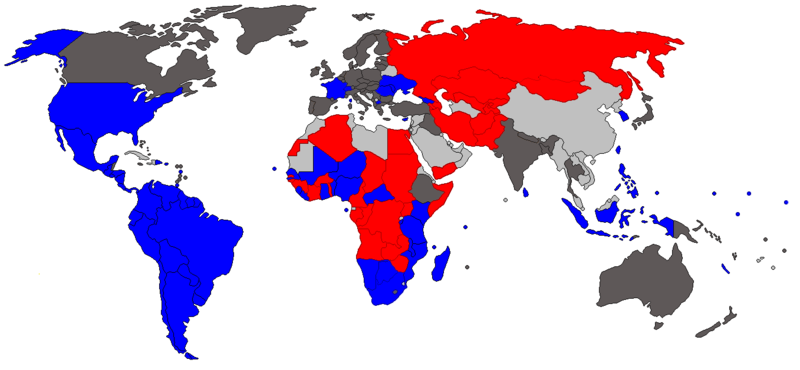
Posted by
Democracy By The People
at
4:57 PM
0
comments
Links to this post
Labels: CARIBBEAN, Democracia Participativa, DOMINICAN REPUBLIC, LATIN AMERICA, Presupuesto Participativo, REPUBLICA DOMINICANA
ITALY: TFF promotes Direct Democracy
Visit the Telematics Freedom Foundation website here: http://www.telematicsfreedom.org/en - Editor
Italy: TFF promotes Direct Democracy
Sepp Hasslberger
11th November 2008
Source: http://blog.p2pfoundation.net/italytff-promotes-direct-democracy/2008/11/11
The italian-based Telematics Freedom Foundation promotes a more direct and participatory idea of the democratic process.
Some of the immediate targets are
- user-controlled telematics services
- self-management of democratic organizations and
- national and constitutional legislative changes
to support the widespread introduction of software-based democratic interaction.
Direct Democracy or ‘Continuous Democracy’ is promoted through the development of tools (software, methodologies and infrastructure) that make it possible for citizens to continuously discuss and to directly express preferences on important political questions.
A first concrete step to promote this change “on the ground” is the Lista Partecipata per la Democrazia Diretta, an electoral list based in Rome.
Their software for consensus-building, which allows simple democratic discussions and provides easy decision-making procedures is called Rule2gether and it is available under a GPL public license.
A proposed hardware solution to the problem of allowing those who do not have routine internet access to participate is a TV set-top box running free open-source software that would make communications possible. It is called the Freedom Box or Z-Box.
Posted by
Democracy By The People
at
4:50 PM
0
comments
Links to this post
Labels: e-democracy, EUROPE, Internet Direct Democracy, ITALY
Friday, November 28, 2008
VIETNAM: Legislature Delays Steps Toward Direct Democracy
Vietnam halts election project
Nov 15, 2008
HANOI - COMMUNIST Vietnam's legislature on Saturday put the brakes on a trial plan to allow direct local elections next year, in a last-minute change before closing its autumn session.
The National Assembly instead voted to extend by two years until 2011 the terms of commune and district leaders who were indirectly elected in a process vetted by the Communist Party, a legislator and media reports said.
The original pilot plan, which had been discussed by legislators and outlined in a detailed assembly paper, would have mirrored the village-level elections introduced by neighbouring China 20 years ago.
The original proposal would have seen an April 25 vote next year in which citizens in 385 communes nationwide would have directly elected their people's committee chairperson, a post akin to town mayor.
However, in a last-minute change early on Saturday, lawmakers approved other local government reforms, but scrapped the pilot plan for direct elections at the grassroots level of the Vietnamese political system.
Mr Uong Chu Luu, the assembly's deputy chairman, said the introduction of direct elections and 'the development of direct democracy at the base should be introduced prudently, with appropriate steps'.
With debate finished on the topic, the assembly closed its session.
Vietnam's Communist Party keeps a tight grip on all political activity, both through cells in schools and workplaces and through the Fatherland Front, an umbrella group for mass organisations such as farmers' and youth unions.
Decision making in Vietnam has long been top-down, with missives spread through loudspeakers and mass mobilisation campaigns that inform people about party edicts on everything from new farm techniques to family planning.
The new pilot project had been proposed a decade after the ruling party issued its so-called Grassroots Democracy decree, which outlined ways to expand citizens' participation, oversight and transparency in local government.
That decree - summed up by the party slogan 'people know, people discuss, people do, people supervise' - was meant to help defuse local grievances following outbreaks of rural unrest in northern Thai Binh province in 1997.
In recent years, amid Vietnam's rapid industrialisation, the number of land disputes has risen in rural areas, with farmers commonly accusing local officials of corruption and taking their land without adequate compensation. -- AFP
Posted by
Democracy By The People
at
12:20 PM
0
comments
Links to this post
Labels: ASIA, Direct Democracy, Participatory Democracy, VIETNAM
BOLIVIA: Conferencia Internacional de Democracia Participativa en La Paz
Fuente: http://www.erbol.com.bo/noticia.php?identificador=2147483914158&id=1
La Paz, 19 Nov (Erbol).- Arrancó este miércoles en la ciudad de La Paz la 8va Conferencia Internacional de Democracia Participativa con la participación de 250 ciudades de los cuatro continentes.
El evento se denomina "Interculturalidad y Participación Ciudadana, Modelos de Inclusión" bajo la organización del Observatorio Internacional de Participación Ciudadana. Hasta este viernes se realizarán mesas redondas, debates, intercambio de experiencias, de generación de mecanismos de diálogo con las conclusiones respectivas.
En la inauguración participaron: el comisionado de la Alcaldía para Participación Ciudadana del Ayuntamiento de Barcelona, Ramón Nicolao, el ministro de Educación, Roberto Aguilar, además del anfitrión Juan Del Granado, alcalde de La Paz.
Por qué La Paz
Ramón Nicolao explicó que este evento se realiza anualmente y que para este año se eligió a la ciudad de La Paz por haber propuesto el tema de la interculturalidad en la participación ciudadana.
"Otro motivo es que La Paz tiene una experiencia de Observatorio Local de Democracia Participativa que ha publicado algunos estudios y documentaciones que a muchos otros países nos ha llamado la atención, nos gustaban, nos parecían interesantes", dijo Nicolao.
Precisó que la democracia ya está consolidada en los países con electos escogidos democráticamente por periodos de 4 a 5 años; sin embargo esto no es suficiente, el paso siguiente es conseguir sistemas de enriquecimiento de esta democracia por la vía participativa.
"Es decir que los ciudadanos, que votan cada cuatro o cinco años, sean consultados nuevamente durante la realización de este mandato mediante consejos de participación donde están incluidas las organizaciones y todos los sectores sobre lo que ellos consideran necesario para la ciudad y para comunidad", dijo Nicolao.
Interculturalidad
El evento debatirá temas como la participación ciudadana, la propuesta intercultural en procesos educativos, la construcción de una institucionalidad democrática intercultural y la pluralidad en términos culturales de género y de participación.
Cada año 250 ciudades de todo el mundo, América, Europa, Asia, África se reúnen para reflexionar sobre cómo se está mejorando la democracia participativa, los distintos consejos sectoriales, consejos ciudadanos, consejos de barrio
Explicó que el tema de la interculturalidad es bastante importante porque se puede unir los procesos de participación con una realidad cada vez más presentes en muchas de las ciudades.
"Es un hecho importante que en la misma comunidad, en el mismo territorio residan personas que tengan identidades culturales distintas y que conviven porque el territorio es el mismo y la voluntad de mejora de la población es para todo el conjunto, no sólo para un grupo sino para todos", dijo Nicolao.
Seguir aprendiendo
Por su parte el alcalde Juan Del Granado, a tiempo de destacar la presencia de invitados de distintas partes del mundo, explicó que en el municipio de La Paz existe el Observatorio Local de la Democracia Participativa cuyo espacio sirve para democratizar el ejercicio del poder público y las oportunidades para acceder a los espacios de la decisión.
Señaló que en estos dos días los cerca de 500 participantes, representantes vecinales, de las organizaciones, Comité de Vigilancia y ciudadanía en general que se inscribieron debatirán los niveles de la democracia participativa y el tema de interculturalidad.
"Vamos a tener la gran oportunidad de conocer las experiencias de prácticamente cinco continentes en lo que es la democracia participativa, es una oportunidad excepcional para seguir aprendiendo, para seguir recogiendo lo que es una línea de trabajo especialmente significativa en el espacio local", dijo Del Granado.
Posted by
Democracy By The People
at
12:16 PM
0
comments
Links to this post
Labels: BOLIVIA, Democracia Participativa, LATIN AMERICA
Tuesday, November 25, 2008
CANADA: New Brunswick Green Party Gains Momentum with Platform of Participatory Democracy
Mike Milligan acclaimed as interim leader at founding convention
A4by dwayne tingley
times & transcript staff
Source: http://timestranscript.canadaeast.com/news/article/483165
Mike Milligan called it an historic day and he expects politics in New Brunswick to never be the same.
New Brunswick's Green Party took its first steps toward fielding a full slate of 55 candidates for the next provincial election in 2010 Saturday at its founding convention at the Université de Moncton student centre.
The day-long convention attracted about 30 participants and 22 voting delegates who unanimously acclaimed Milligan, a 51-year-old small businessman from Shediac River, as its interim leader.
"This is grassroots democracy," said Milligan, who operates a motorcycle shop in Moncton.
"For years, it has been obvious the existing political parties have not been listening to the people, but the Green Party offers participatory democracy, where everyone has a say and the people speak for the government."
Delegates spent most of day debating and ratifying the party's constitution, which includes bylaws covering everything from how their leader will be chosen to how members will be notified of upcoming meetings.
The party expects to hold its first leadership convention next spring. Until then, efforts will be made to organize associations in each of the province's 55 ridings.
Milligan, who was the Green candidate in the federal riding of Beausejour in the recent federal election and collected almost 3,200 votes, said the party has a solid foundation and predicted it will continue to grow.
"We got 22,000 votes (about seven per cent) in New Brunswick in the last federal election so people are hearing our message," Milligan said.
"We've been well-represented in southern New Brunswick, but we have to be better organized in the northern part of the province," he said. "We're hoping more people step forward and help us out now that we have had our first convention and things are coming together."
The party also elected its first executive at the meeting and long-time director of Conservation Council of New Brunswick Janice Harvey of Waweig, near St. Stephen, was chosen president.
Francoise Aubin of Dieppe and Stephanie Coburn of Sussex will serve as vice-presidents while Pierre Roy of Moncton will be the secretary and Leona Davies of Fredericton will be treasurer.
Executive members at-large are: Art Hacking of Memramcook, Beth Stymiest of Riverview, Marco Morency of Moncton, Mathieu Bourgeois of Moncton and Mary Ann Coleman of Waterford, near Sussex.
Posted by
Democracy By The People
at
8:56 AM
0
comments
Links to this post
Labels: CANADA, Green Parties, New Brunswick, NORTH AMERICA, Participatory Democracy
VENEZUELA: Direct Democracy - The Case of the Consejos Comunales
Venezuelan Direct Democracy – The case of the Consejos Comunales
November 21st 2008, by Michael Albert and Adam Gill - ZNet
Source: http://www.venezuelanalysis.com/analysis/3967
In 2004, Venezuelan President Hugo Chavez created a movement named the consejos comunales (communal councils) aimed at creating more responsive local governance by handing local budgetary and legislative power to the councils. This movement was seen by Chavez as one of the most important of the five motors of the ‘Bolivarian Revolution' in that they should influence policy from the grassroots upwards. Great interest in the councils was evident between 2004 and 2007 in that thousands formed quickly and $5 Billion was given to them during this period. Communal banks are a pre-requisite to receiving funds from the government so as to avoid clientalistic relationships of dependency.
Local councils have the power to vote on issues directly affecting their community and have used this to make significant changes. Major improvements have included building social housing and repairing roads. The local councils are formed with 200-400 families with members aged 15 and above and have an executive council and representatives of groups within the community.
I asked Michael Albert if he might be able to offer his opinion on this movement in Venezuela.
--------------------------------------------------------------------------------
What do you feel the role of the Communal Councils is strategically and politically?
Well, I believe they are partly intended, in the present, to push forward the whole revolutionary process by increasing current participation, raising consciousness, etc.
But I also believe that for a great many folks in Venezuela, both inside and outside the government, the councils are the evolving infrastructure of a new polity. The idea is that people should govern their own lives, and in that context local councils are the proposed vehicle for doing it. As such, they are intended to become an alternative to rather than just being an adjunct to local governments of mayors and governors and the like.
Would you say the councils have created social change or more that their energies are being pulled in other directions?
I don't feel very equipped to answer this question, and I am not entirely sure, in any case, what you mean by "other directions." I can judge only from a very great difference and based on talks with only a limited number of people what the councils are up to.
My impression, and it is tentative, is that the councils are a vast and evolving experiment and project, by no means final in form and by no means fully up to speed, but coming along, though many problems still exist. First, for example, there is a population which - like our population in the U.S - has almost zero experience prior to this experiment with serious democracy much less participatory self management. So the councils and their members are learning in practice, and for many people that has ups and downs. But second, and less benign, there are obstacles as well having to do not only with past habits or current doubts, but also with real opposition, as in local governing and corporate elites not wanting this experiment to work.
Venezuela seems to me to be uniquely seeking a gigantic revolution in structures and relations - not just economically but also politically, socially, culturally - all non violently and even without much confrontation, none provoked by the agents of change. That is historically ambitious, to say the least.
So in one corner you have corporate media continuing, and corporate ownership in many realms, and governors and mayors and whatnot from the prior history of the country, all also still in place, nearly all still hoping to resurrect that prior history. In the other corner you have the Bolivarian activists, and Chavez, and a large proportion of the non elite population, instead trying to escape that past into something fundamentally new.
Venezuala is, in other words, a daily economic, political, social, and cultural cauldron of experiment and opposition - and thus a site of intense struggle. Or that is how I see Venezuela, at any rate, and in that context the local communal councils are partly a tool of the struggle but are also partly seeds of a new future being built in the present.
Should Communal Councils be free of political party influence?
This depends, I think, on what you mean by party influence. So, for example, it wouldn't make sense to say there should be no party influence. Imagine a council with people in it, of course. Some people are in one party, some people are in another party. The parties they are in influence those people's desires (and vice versa). The people then bring their desires to the councils, so through their members the parties influence the councils as well. That much is fine, in my view. It would make no sense to say that shouldn't occur.
So, for example, there are councils in communities that are very Bolivarian, and they have views and aims quite like those of the Bolivarian revolution. There are other councils in communities that are opposed to Bolivarian projects, and those councils reflect those opposition views. The parties are in part carriers of the views and the people form parties, in turn, influence the councils.
On the other hand, I think you might mean should parties as entities be able to themselves direct or otherwise impact councils, other than by the fact of their members indirectly doing so. Here I think the answer is no, they should not be able to do that.
Your question is a bit like asking, in the U.S., should local government (just imagine, for the sake of the discussion, that it was actually grassroots and participatory) be in any way at all subject to instruction or control by political parties (other than being impacted by the local members of the community who happen to be in parties)? Well, of course it shouldn't, and ditto for Venezuela. A party should impact councils simply by impacting the population that composes the councils, but not by some sort of collective or structural authority.
Do you think that party influence and political movements still operate as clients of central governments?
I am not sure I understand this question. In Venezuela, at present, the Bolivarian revolution is very much a manifestation of the ideas and will of President Chavez. We might prefer that the movement had bubbled up, instead, from the population, and that Chavez was merely one among many carriers of their intentions - but that isn't the case. In fact, Chavez is constantly trying to impact what the population thinks and wants, not just to hear from it. The government is not only administering Venezuela, as it is seeking to use state power as a tool to build social involvement and activism. It is very unusual, of course.
So in that context, the recently created revolutionary party Chavez is in is certainly affected greatly by him, as are the social movements whose members typically consider him a repository of valuable ideas and plans, as is the government. Again, this is arguably not an optimal picture, and it is certainly an unusual one - a president seeking to build movements that will replace authorities, including the old government structures, including himself - at least that's the current agenda - throughout the country - but that is what is happening, or so it seems to me, from my admittedly limited contact.
Can the Communal Councils in your opinion, become the only form of local government in Venezuela? What obstacles do you perceive to be happening now and possibly in the future?
I certainly think that is possible, and that that is the goal, not just conceivable, at least in many people's minds, including in the relevant political ministries. I sat in offices and heard them explain their hopes for these councils becoming the seat of governing power throughout the country, describing the 50,000 councils that were needed - with about 30,000 currently formed - and describing the gains in confidence and methods also needed within the councils, and explaining that yes, these would be above majors and governors and even the President. So, yes, having them be the primary locus of government power is the aim. Might that aim be swept aside as a goal? Sure, it might. But it also might come true as a reality.
Posted by
Democracy By The People
at
8:47 AM
0
comments
Links to this post
Labels: Community Councils, Consejos Comunales, LATIN AMERICA, Participatory Democracy, Venezuela
Wednesday, November 19, 2008
BRASIL: Video do Movimento da Democracia Direta
Segunda Turma MCR-MCD Brasília
Posted by
Democracy By The People
at
11:59 AM
0
comments
Links to this post
Labels: BRASIL, Democracia Direta
Tuesday, November 18, 2008
VENEZUELA: The Struggle Continues
The following article dicusses some of the stumbling blocks in the process of bringing participatory democracy to Venezuela, while recognizing that the country is slowly advancing the transition of power and control of resources to the people. - Editor
Sounds of Venezuela: Part 8
Grass Roots Democracy
by Ron Ridenour / October 25th, 2008
Source: http://www.dissidentvoice.org/2008/10/sounds-of-venezuela-part-8/
Participatory democracy: people actively organizing in the communities and attending meetings where local issues are discussed and solutions are proposed and voted on—is a major element of the Bolivarian Revolution. By August 2007, 2.2 million citizens were organized in 25,000 community councils (CC). In February 2008, community councils, their elected spokespersons and municipal officials and advisors engaged in lively meetings to evaluate progress and lay a course for the future. These meetings were followed by gatherings of two of the three largest and most important political parties backing this process: the new PSUV and Venezuela’s oldest, the Communist Party (PCV). I attended some of these events.
In Las Mercedes district, where I lived, nearly 100 members of five CCs gathered at a local hall. A large majority were women, mostly 40 years old and over. They met to consolidate their social organizing and take a position on a structural change proposal. Direct participation had allowed each CC to take individual directions but this was leading to a bit of chaos: differences in how to use resources, what programs took priority, which CC should house the local bank that distributes the funds allocated for community councils. Most of these funds come from the federal government, some from municipalities. These authorities were proposing that the structure be changed to accommodate a bit of centralization and control, which could lead to greater effectiveness.
I was surprised and impressed with how people openly complained about the failure of the municipal government to disseminate adequate information and provide basic training for community leadership and organizers, and about how people’s admiration for Chavez did not hinder several in objecting to the new proposal. A few rose in opposition to the mancomunidades proposal, which would bring several CCs inside an umbrella body that would work with authorities from “above” the individual CCs, as some viewed this.
“There is nothing in the law under which community councils operate that mandates such a direction,” said one opponent. “On the contrary, it speaks of direct power, and resources going directly to each council. Some of the municipal advisors are saying things here that is not the law, nor what Chavez has said.”
Another man spoke sharply from the podium:
“We lack training. We lack information from our local leaders. Some do not know how to manage administratively, either our projects or the moneys allocated. Too many of us are still driven by egoism. We have to learn how to motivate our councils, the spokespersons and our neighbors.”
The issue of where the bank administering CC funds should be located led to a hefty debate. The majority wished to move it from the CC where it was, because that council was not active and there was suspicion that the funds were not well utilized. Representatives from one council said the money they should have received was not forthcoming.
Solutions to these matters would be decided upon at another round of meetings and after street debate.
That evening I attended a local PSUV meeting. The main topic was the current round of CC meetings and the issue of mancomunidades. The general attitude among these one dozen members, mostly over 45 years old, was that “a small group tried to sabotage the assembly”, as the chairman characterized the protest. Not all were caught up in heavy-handed terminology and limited condemnations, and some saw the need to struggle internally to solve significant problems not being addressed by their local government. Among those was the lack of caring and adequate medical treatment at the hospital, which was raised by a retired doctor who volunteers at the local hospital.
After the meeting, five of us went to a café to imbibe in national brews. They asked my opinion on a variety of issues, and what did I see as the number one problem within the revolutionary process. I hesitated to render conclusions after such a short time observing, but they insisted. My spontaneous answer was: the lack of follow through.
Everyone agreed. Example after example plopped onto the wobbly table. I presented one and asked their opinion about the cause. I recalled what a young taxi driver had told me. As a supporter of the Chavez government, Gabriel had applied to take a Francisco Miranda course in Cuba. The idea behind this mission is to create a civilian cadre, which would form a military reserve for defense. The volunteers were often sent to Cuba to acquire a political understanding of revolution and some discipline. So far about 3000 had participated. My driver told me that when he returned from three months “enjoying the generous hospitality of Cubans, not the least the women”, there was nothing to incorporate into, there was no follow up at home. What little he considered he had learned in the brother nation he had forgotten with disuse. Gabriel was so disgruntled he said he would not vote for Rosa León again, albeit mayors have nothing to do with this mission.
Yes, that was all too familiar, the PSUV activists replied. “Lack of infrastructure; most people look after self-interests; some generals don’t want an independent militia; too much talk-not enough action.”
I encountered the same problem with the voceros. At the weekly meeting for all spokespersons of the more than 100 CCs, 17 showed up. They spoke about problems in advancing some projects, about too many activists meeting late or abstaining, problems balancing family, a job and volunteer work. One of the agenda items was an invitation for me to hold a lecture-seminar about communication, how to better reach people in the neighborhoods.
Many spoke enthusiastically about the need for learning. I could also offer advice about a newsletter soon to be launched. Agreement was reached on a day session with lunch and a date set. I prepared for this important initiative. I heard nothing in the week to come. The day before the event, I phoned the municipality’s paid coordinator of the voceros. Oh, he said evenly, no one arranged anything. He did not understand my disappointment and dismay of the frivolous manner of unfulfilling decisions.
Why is making a revolution so difficult?
Ah, imagine your neighbor Sarah. She gets her news from the national and international corporate media. She does what pleases her. If she doesn’t see the fun in doing something she doesn’t do anything. Yeah, we know a lot like her. It might even ring a bell inside. So, what does it take to have Sarah change into a person who wants to cooperate with many others, taking her time, using her energy to create something new, something great for everybody, if everybody works at it? Just what are the tools we need—mental and spiritual as well as physical and emotional ones—and how do we develop them? That is not so easy to conceive let alone practice and transform society in a few years, right?
Already, through the energy generated by the mass behind the committed leadership, wonders have been created. Alongside those I’ve portrayed earlier in these writings, is an essential and historical one. Vicente Vallenilla, the Venezuelan ambassador to Denmark, told me before I departed for his homeland:
“We say that what is happening now is real sovereignty, and for the first time in our history. We are taking our natural resources into our own hands. We are transforming from the sole objective of profit-making for a few to greater distribution of the wealth, commonly created, replacing the raw materialism of today with a more spiritual life tomorrow, one of sovereignty and independence, of wholeness in fellowship and, thus, happiness.”
Posted by
Democracy By The People
at
5:39 PM
0
comments
Links to this post
Labels: Boliviarian Revolution, Community Councils, Consejos Comunales, LATIN AMERICA, Participatory Democracy, Venezuela
Friday, November 14, 2008
PERU: Asamblea Nacional de los Pueblos
ASAMBLEA NACIONAL DE LOS PUEBLOS
8 DE NOVIEMBRE SESIÓN DE INSTALACIÓN
CONVOCATORIA.
Fuente: http://www.congresobolivariano.org/modules.php?name=News&file=article&sid=4949
Dirigentes y delegados de organizaciones sociales, sindicales, campesinas, políticas y de diversos sectores ciudadanos, convencidos de la necesidad de construir la gran unidad del pueblo peruano para lograr los grandes cambios que el país demanda, nos hemos autoconvocado ... (sigue)
... para dar nacimiento al proceso de organización de la Asamblea Nacional de los Pueblos, concebida como un espacio amplio y plural, de profundo contenido democrático y protagonismo ciudadano en la formulación y aplicación de políticas de Estado.
La Asamblea Nacional de los Pueblos surge como una necesidad frente a la crisis del Estado y a la “democracia” deformada, restringida y excluyente que ejercitan los sectores dominantes. La verdadera democracia es integral: Social, económica y política; es representativa, participativa, descentralista, sujeta al control ciudadano. Tal democracia está por hacerse, tan igual como la justicia social, la igualdad de derechos y oportunidades para todos, el reconocimiento de los pueblos originarios y minorías étnicas, asume y fortalece el protagonismo de los jóvenes, la igualdad de género, la plena soberanía nacional; en suma, la equidad en la distribución de la riqueza y en la conducción del Estado para garantizar el desarrollo sostenible y bienestar para las mayorías.
La Asamblea Nacional de los Pueblos se plantea también como respuesta al desvergonzado entreguismo del gobierno actual, su creciente tendencia autoritaria y prepotente, su indeclinable sometimiento a las trasnacionales y los poderosos del país; además de su corrupción sin límite ni control. Ello exige proponer alternativas prontas y firmes, que sólo pueden surgir de los ciudadanos concientes de sus responsabilidades, organizados, unidos, dispuestos a hacerse oír y respetar.
La Asamblea Nacional de los Pueblos representa un reto para millones de peruanos que son víctimas del injusto modelo económico y no aceptan la prepotencia, ni la intolerancia; que quieren ser actores de su presente y su futuro, que sueñan con una Patria libre, digna, solidaria y soberana, y anhelan un nuevo régimen económico, social y político. Sin renunciar a la democracia representativa, depurándola de sus elementos corrosivos, y apoyándose en la lucha social y política, la Asamblea Nacional de los Pueblos se propone dar curso a la democracia participativa y directa, como expresiones genuinas del principio “el poder emana del pueblo” y del verdadero cambio que ello exige.
En ella caben los hombres y mujeres de buena voluntad con sed de justicia y de Patria, de todos los credos y culturas, de las organizaciones sociales, sindicales y políticas nacionales, regionales y locales comprometidas con el cambio, de las comunidades campesinas y nativas, de las rondas campesinas, de las minorías étnicas, de organizaciones de emprendedores, micro, pequeños y medianos empresarios, comerciantes, productores del campo y de la ciudad, de los movimientos regionales descentralistas, estudiantes de todos los niveles, profesionales, trabajadores de la cultura, de la investigación y de la ciencia, de la intelectualidad y de la prensa crítica, de los movimientos de mujeres y de jóvenes, de las iglesias vinculadas a los pobres, identificados todos con el cambio social que el pueblo peruano demanda.
Buscamos que la Asamblea nazca del pueblo, se nutra de sus luchas y tradiciones, y le sirva como una poderosa herramienta de cambios, de defensa y de conquista de derechos. Queremos constituirla para defender el derecho al pan y al trabajo, a la educación, salud y seguridad social para todos; el derecho a la organización, la participación y el control ciudadano sobre las autoridades; así como a un medio ambiente sano, protegido y equilibrado.
Llamamos a todos los que aspiran a vida digna y solidaria a incorporarse a este proceso unitario y los convocamos este 08 de noviembre a sesión de instalación donde se elegirá la correspondiente Comisión Organizadora de la Asamblea Nacional de los Pueblos, en la perspectiva de forjar una amplia unidad por un nuevo régimen económico y social y por una democracia verdadera para todos.
Otro Perú es posible. Ese es el sentido de la historia por escribir con la acción protagónica de las mayorías excluidas y los sectores olvidados.
¡La Asamblea Nacional de los Pueblos inicia su Marcha!, ¡Nadie la detendrá!
COMITÉ PROMOTOR DE LA ASAMBLEA NACIONAL DE LOS PUEBLOS
CGTP, CUT, CCP, UFREP, SUTEP, FEP, COLEGIO DE PROFESORES DEL PERÚ, CUNARC (Rondas Campesinas), FRENTE CÍVICO DE LIMA, FRENTE REGIONAL DE SAN MARTÍN, CONFIAR (ambulantes), CPS LIMA SUR, CPS LIMA CENTRO, CPS SAN JUAN DE LURIGANCHO, CPS VILLA EL SALVADOR, CPS LIMA NORTE, CPS LAMBAYEQUE, SUNTTTERP, COORDES, CTE, JUVENTUDES CGTP, ANCIJE, FENTUP, FACA AREQUIPA, FENUTSSA, FESIDETA, FREDELL LA LIBERTAD, ACCIÓN INTERNACIONAL POR LA PAZ, COLECTIVO MANOS LIMPIAS, SINDICATO DE TRANSPORTES, SUCHOCOP, FOROMIPE, CPS RIMAC, CPS OXAPAMPA, FEDERACIÓN MÉDICA DE CUSCO, SINDICATO CONSTRUCCIÓN CIVIL HUANCAVELICA, CONSTRUCCIÓN CIVIL TINGO MARÍA, CONSTRUCCIÓN CIVIL MOQUEGUA, IDPA, CGTP APURIMAC, CGTP HUÁNUCO, CGTP PUNO, CGTP TUMBES, CGTP LORETO, GRUPO DE ESTUDIANTES IP, PRESUPUESTO PARTICIPATIVO SJM, CONFERENCIA AGRÍCOLA, OTRO MUNDO ES POSIBLE, PARTIDO COMUNISTA DEL PERÚ – PATRIA ROJA, PARTIDO COMUNISTA PERUANO, PARTIDO NACIONALISTA PERUANO, PARTIDO SOCIALISTA, MOVIMIENTO NUEVA IZQUIERDA, FOCEP, LIBERACIÓN POPULAR, FEDEP, PUEBLO UNIDO, VOZ SOCIALISTA, COMITÉ MALPICA, PARTIDOSOCIALISTA REVOLUCIONARIO, COORDINADORA POLÍTICA REGIONAL AYACUCHO, JUVENTUD FOCEP, COMISIÓN DE MUJERES CPS (MNI, PCP, PS, FOCEP, LIBERACIÓN POPULAR, VOZ SOCIALISTA, PCDEL P – PATRIA ROJA, CGTP)
La Asamblea de la ANP se realizará en: Local de la Federación de Trabajadores En construcción Civil del Perú, sito en Prolongación Cangallo Nº 670 – La Victoria. A partir de las 10.00 a.m. del día sábado 8 de noviembre del 2008.
Enviado el viernes, 07 de noviembre a las 04:04:00 por unidadlatinoamerica
Posted by
Democracy By The People
at
1:46 PM
0
comments
Links to this post
Labels: Democracia Participativa, LATIN AMERICA, Participatory Democracy, PERU
Participatory Democracy for Social and Ecological Justice
BEIJING EXPRESS
By CELESTE FONG
Source: http://thestar.com.my/news/story.asp?file=/2008/10/26/focus/2379810&sec=focus
PRIOR to the meeting of Asian and European leaders in the Chinese capital for the Asia-Europe Meeting (ASEM) on Oct 24 and 25, more than 500 people from key grassroots, activist networks, and non-governmental organisations from Asia and Europe gathered at a three-day forum themed “For Social and Ecological Justice” here.
Since 1996, the Asia-Europe People’s Forum (AEPF) has been held every two years, normally before the ASEM, and AEPF participants gather to discuss a range of issues, exchange views and share insights.
For the Seventh Asia-Europe People’s Forum, the discussions were organised in three clusters: peace and security; social and economic rights and environmental justice; and participatory democracy and human rights.
With the onset of the current global financial crisis, the forum’s delegates called for a re-design of the global financial system, saying that Europe and Asia should take the initiative.
“So, once again we stand at a historical moment in a sombre mood, surveying the wreckage of crises that are both long-term and of immediate consequence; of crises that are both structural and conjunctural; of crises that demand not cosmetic reforms but a deep-rooted and sustainable transformation of how we shape the global order,’’ said Klang Parliamentarian Charles Santiago, one of the speakers at the forum’s opening ceremony.
Santiago: ‘Developing countries like China, India and Brazil could lead the world in re-setting a new financial rchitecture.’ — By Celeste Fong
Santiago, who is also director of Monitoring Sustainability of Globalisation, called for ASEM leaders to tell the global community from Europe and Asia that the unfettered deregulation of markets has to stop!
“Developing countries like China, India and Brazil could lead the world in re-setting a new financial architecture,” he added.
In his speech, he said govern ments, regional organisations, and international institutions like the IMF and World Bank have “all scrambled in unseemly haste to bail out their benefactors through subsidies for the rich.
“How ironic that the ‘free markets’ are today totally dependent on state intervention.
“The capitalist state is fulfilling its historic task of providing all the necessary guarantees for the survival of property.”
What is peculiar about the 2008 financial crisis, said Santiago, is that it is taking place alongside a food, energy and ecological crisis.
“It humbled the world’s economic super powers. They are asking developing countries like China to help solve the credit crisis through coordinated interest rate cuts,” he said.
China’s recent move to cut interest rates twice in three weeks is widely seen as part of a global collaboration to counter the crisis and an important contribution to the rest of the world.
Heidi Hautala, an experienced Green politician and a member of the Finnish Parliament, told the forum that the whole world is now feeling the consequences of an unprecedented collapse of the financial system.
“AEPF has consequently promoted the replacement of blind pro-market policies by alternative people-centred policies,” she said.
“We noted in Helsinki that ASEM countries control over half of the world’s gross national product. Thus, ASEM could be a key mechanism to lead the world on a sustainable path.
“To us, it is very clear that ASEM can only succeed if civil society gets access to it.’’
At the opening ceremony, Chinese Foreign Minister Yang Jiechi voiced his hope that the forum would play a positive role in promoting people-to-people exchanges and cooperation between Asia and Europe and in pushing forward the ASEM process.
“It (the forum) will also make a unique contribution to maintaining world peace, stability and prosperity and promoting human progress and development,’’ he said.
Yang said the recent turbulence in the international financial market has dealt a blow to the world economy and aroused the concern of the entire international community.
“No country in the world can expect to stay away from such issues as global warming, environmental degradation, resource shortage and the increasingly grave international economic and financial situation or address them on one’s own.”
After the three-day discussions, the AEPF called for a fresh policy agenda to address economic policies which take into consideration ordinary people, human rights and the environment.
The AEPF’s final declaration, including the call for a broadened agenda like governance and human rights issues, environmental sustainability and people-centred development, would be passed to the ASEM meeting which began on Friday.
Besides Santiago, who is also a member of the international organising committee of the AEPF, other Malaysian participants included Monash University School of Arts and Sciences lecturer Wong Chin Huat, PAS’ Capt Muhd Alimin Aziz, MBPJ councillor S. Ramakrishnan and other representatives from Malaysian NGOs.
Posted by
Democracy By The People
at
1:23 PM
0
comments
Links to this post
Labels: ASIA, EUROPE, Participatory Environmental Management
Thursday, November 13, 2008
SOUTH KOREA: Building Organizations for Participatory Society
movement that grew out of the candlelight protests responds to the ‘crisis in democracy and the people’s welfare’
Source:http://english.hani.co.kr/arti/english_edition/e_national/315196.html
» Representatives of civic organizations and opposition parties discuss the formation of a new organization to address political and social issues at the People’s Solidarity for Participatory Democracy on October 9.
“Democracy and the people’s welfare have been in complete crisis since the start of the administration of President Lee Myung-bak,” said organizers at a press conference. “Laborers, farmers, netizens, intellectuals and political parties will come together to overcome this crisis with the New Solidarity Organization.”
Explaining the decision to include political parties, organizers, said it was made “in respect to the principle that we are going to seek very wide-ranging solidarity” and that parties might be included as having “observer” or other status.
The process that has led to the formation of Minminyeon runs parallel to the candlelight protests and the way the politics surrounding them dominated the political landscape.
“The ‘candlelight,’ that symbol of democracy, fell into difficulty when crushed by the Lee administration,” said Kim Min-yeong, PSPD’s secretary general. “Discussion about forming a solidarity organization originated in a sense of crisis, one that saw the crisis in democracy as directly related to the disastrous state of the people’s welfare.”
Civil society “elders” Paek Nak-chung, professor emeritus at Seoul National University, Park Won-soon of the Hope Institute and others met on September 24 and proposed a “consultative body that is organized with groups involved in a wide range of social movements.” The resulting organization was going to be a gathering of civil society groups that have felt the need for something like Minminyeon, Internet activists who were behind much of what became the candlelight protests, and a wide ranging scope of progressive political elements.
Part of the impetus for Minminyeon is the realization that there were going to be limits to what the People’s Countermeasure Council against Mad Cow Disease could do as an organization over the long term.
“We kept saying to ourselves that we needed an organization that could respond to the crisis in democracy and the people’s welfare, one that was more encompassing and went beyond the task force,” said Park Won-seok, the head of the task force’s “situation room.”
“We came to agree that we needed to be inclusive of all forces that share a consensus, including the labor movement and netizens,” said Park, adding that Minminyeon was the “broadest form of solidarity.”
Representatives of the groups present for the preparatory meeting adopted a declaration at the same “emergency meeting” October 9. “Each organization participating will respect each other’s diversity and act in solidarity where common responses are required,” it said.
“It was decided that we work with political parties because we are confident civil society forces have a leading role to play,” said Park Won-seok. “We believe that we can bring about change in the political situation as a whole, in the local government and National Assembly elections coming in 2010 and on to the presidential election, through solidarity and a loosely organized network.”
Whether Minminyeon will be able to overcome the differences among the groups that were part of the task force on mad cow disease remains to be seen. Minminyeon already encompasses a diverse range of groups and approaches, from those that want to adopt an“anti-dictatorship stance” to those that insist on an “loosely organized network.” Organizers say the differences will be overcome with the principle that issues will be decided “from the bottom up.”
“We have to organize quickly so that we can move together and decide how intense we are going to be, since the welfare crisis is so serious,” said one organizer.
Please direct questions or comments to [englishhani@hani.co.kr]
Posted by
Democracy By The People
at
10:41 AM
0
comments
Links to this post
Labels: ASIA, Citizen Power, Participatory Democracy, South Korea
ITALIA: No Dal Molin - Vicenza
NO DAL MOLIN ALLE COOP: NON COSTRUITE UNA BASE DA GUERRA
lunedì 27 Ottobre 2008 (01h03) :
Fonte: http://bellaciao.org/it/spip.php?article21631
La Coperativa Costruttori Cementisti e quella dei Muratori Cementisti hanno vinto l’appalto per costruire la base: 150 vicentini in delegazione alla Conferenza nazionale delle Coop per dire ai soci: state con noi. Il testo dell’appello in allegato all’articolo
Di Mariano Trevisan, Prc di Vicenza e movimento no dal Molin Dopo il successo della consultazione popolare, dove in una sola giornata ben 24.000 cittadini di Vicenza si sono espressi contro la costruzione della nuova base USA al Dal Molin, il movimento si rimette in marcia con tutta la forza che lo ha contraddistinto per più di due anni. Una serie di iniziative pressoché giornaliere che dureranno un mese e che avranno il loro apice con la programmazione di uno sciopero generale della città di Vicenza.
Come prima iniziativa il popolo delle “pignatte” oggi 25 ottobre è andato a fare “visita” alla Conferenza Nazionale delle Coop. tenutasi nella città di Parma, dove centinaia di soci coop provenienti da tutta Italia erano presenti. Tema del convegno “Rapporto fra struttura, etica e dimensione”, perché da tempo queste organizzazioni sono diventate sempre più industrie e sempre meno cooperative.
Molti si chiederanno quali sono le motivazioni che ci hanno spinti ad andare a questo congresso, lo scopo è presto detto: la Coperativa C.C.C. (Coperativa costruttori cementisti) e la C.M.C. (Coperativa muratori cementisti) sono le due ditte che hanno vinto l’appalto per costruire la nuova Base a Vicenza. Allora quale motivo migliore se non andare a Parma per cercare di toccare le corde sensibili dei soci Coop? Questi soci dovrebbero essere la parte più attenta alle tematiche di guerra e alle basi militari straniere.
Alle sei del mattino, una delegazione di 150 persone in rappresentanza dei 24.000 vicentini contrari alla base, con 3 pullman si sono recati al convegno suddetto, con bandiere, striscioni, volantini e video sull’area del Dal Molin. Abbiamo parlato con moltissimi soci Coop. che si sono mostrati attenti alle nostre proposte e moralmente scossi di come anche le Coop. quando si tratta di fare denari mettano in un angolo l’etica e i suoi sani principi.
Siamo riusciti a concordare che tutti i 150 componenti del No Dal Molin entrassero al convegno e che uno di noi leggesse un comunicato affinché i tanti soci facciano pressione sulla C.C.C e sulla C.M.C. Lo stesso comunicato lo abbiamo inoltrato al gruppo Consigliare Regionale del PRC dell’Emilia Romagna dove il nostro partito è in maggioranza affinché sia messo ai voti e, se approvato anche il Consiglio Regionale dichiari la propria contrarietà a questo appalto e alla costruzione della nuova base USA al Dal Molin.
Ai falsi profeti che vanno dicendo che la nostra è una battaglia fatta contro i mulini a vento voglio solamente ricordare che: i lavori della Base dovevano partire secondo il Commissario Governativo Paolo Costa nel settembre 2006, ad ottobre 2008 la Ederle 2 non è ancora partita e vi posso garantire che non molleremo un millimetro, a furia di paletti, manifestazioni, ricorsi, blocchi stradali e consultazioni, siamo riusciti, noi, piccola armata brancaleone ad ostacolare i progetti della più grande nazione del mondo; gli Stati Uniti d’America.
Vicenza, 25 Ottobre 2008
Di : Vicenza
lunedì 27 Ottobre 2008
Posted by
Democracy By The People
at
8:27 AM
0
comments
Links to this post
Labels: ITALIA, ITALY, No Dal Molin
Tuesday, November 11, 2008
SPAIN: Participatory Budgeting Advances
New methodology to improve participatory democracy
nächste Meldung 07.11.2008
Source: http://www.innovationsreport.de/html/berichte/informationstechnologie/methodology_improve_participatory_democracy_121862.html
Researchers from the Decision Analysis and Statistics Group within the Department of Artificial Intelligence at the Universidad Politécnica de Madrid’s School of Computing have developed a methodology for improving participatory democracy that could be ready for the Spain’s next local elections due to be held in 2011.
Over 240 Spanish municipalities had a go at participatory budgeting in 2004, and it is estimated that by 2010 citizens will be helping to decide how to allocate 10% of the municipal budget. Until now, though, these participatory budgeting experiences have been carried through without the software to gather citizens’ opinions in real time and then clearly display their preferences as charts on politicians’ computers.
Organizing opinion via the Internet
The School of Computing’s research group, composed of computer scientists, mathematicians and statisticians, has developed this methodology using new technologies, particularly the Internet, as support for organizing and optimizing citizen participation. The methodology is now two-thirds complete and could be applied on the scale of either a municipality or a whole country.
The aim of this methodology is to add citizens’ preferences to political decision-making processes. This it does by establishing a number of questions that citizens answer over the Internet. Duly converted to statistical values, these responses indicate citizens’ opinions on the decision to be taken by politicians in the shape of a chart. A code system prevents people not on the electoral roll from participating.
The methodology represents participants’ beliefs and preferences, evaluating the different budget alternatives based on Dempster and Shafer’s evidential reasoning and ranking the alternatives using a notion of distance from maximum and minimum utility.
Participatory Democracy
Participatory budgeting is shifting the idea of democracy from representation, where citizens’ preferences are taken into account at election time only, to direct participation and discussion. This is an attempt at giving citizens a say in the decision on how to spend part of their municipality’s budget.
The Decision Analysis and Statistics Research Group has collaborated and is now actively participating in several research projects focusing on the development of software tools targeting e-democracy and, especially, participatory budgeting.
They include TED: Towards Electronic Democracy, funded by the European Science Foundation (2003/06); eDemocracia: Apoyo a la Toma de Decisiones Complejas Basadas en Internet (e-Democracy: Internet-based Complex Decision-Making Support), funded by the Spanish Ministry of Science and Innovation (2004/07); Conceptos y Sistemas de Apoyo a la Democracia Electrónica (Electronic Democracy Concepts and Support Systems), funded through Madrid Regional Government’s IV PRICIT (2006/09); and Toma de Decisiones en Grupo con Imprecisión (Imprecise Group Decision Making), funded by the Ministry of Science and Innovation (2008/2011).
Posted by
Democracy By The People
at
6:35 PM
0
comments
Links to this post
Labels: EUROPE, Participatory Budgeting, Participatory Democracy, SPAIN
Monday, November 10, 2008
BRASIL: EUA: Democracia Participativa
07 Nov 2008 - 00h15min
Fonte: http://www.opovo.com.br/opovo/opiniao/833759.html#
A eleição de Barack Obama atraiu uma maior atenção do mundo para o sistema eleitoral americano. Apesar de falho em termos de organização e, por isso, vulnerável à fraude, o processo eleitoral americano é rico em termos de mecanismo de participação, na medida em que combina democracia indireta ou representativa, com democracia direta, proporcionando o que se convencionou chamar de democracia participativa.
Tirar lições do processo eleitoral americano é importante não apenas para se conferir a solidez dos fundamentos políticos que embasam essa nação - assim como as falhas merecedoras de correção em seu arcabouço institucional -, mas, sobretudo, como fator de inspiração para as democracias que vieram após a constituição dos Estados Unidos da América.
De uma forma geral, o Brasil tem muito a se inspirar no modelo institucional americano. É inegável que, do ponto de vista da sistemática eleitoral, o Brasil está bem a frente, seja pelo fato de a escolha de nossos governantes ser direta (com cada voto correspondendo a um eleitor ) seja por conta da própria sistemática de votação, usando tecnologia de ponta, através de urnas eletrônicas. Enquanto isso, nos EUA, alguns estados ainda utilizam os mesmos procedimentos do século XVIII e XIX.
No entanto, o fato de os americanos adotarem com freqüência consultas diretas ao cidadão, através de referendos sobre a realidade local, acoplados às eleições convencionais (seja para a destituição dos representantes (recall), seja para aprovar ou rejeitar propostas de lei, em nível local), sua superioridade é inegável, em relação ao sistema brasileiro.
Reconhecidamente, o sistema presidencialista tem uma forma institucional muito rígida, com mandatos fixos, e sem o instituto da responsabilização do Executivo por seus atos. De uma forma geral, um governante só pode ser destituído, nesse sistema, através de impeachment, no caso de ter cometido crime de responsabilidade. Por conta disso, surgiu a necessidade de introduzir mecanismos de monitoramento do poder pelos cidadãos, através da consulta direta (seja quando estão em jogo decisões polêmicas, seja quando há um impasse político, que possa descambar para o campo institucional). Daí porque os golpes de estado são mais freqüentes no presidencialismo (nos EUA se mata o governante).
Depois dos Estados Unidos, talvez só a Venezuela, a Bolívia e o Equador tenham instrumentos efetivos de democracia direta. A Constituição brasileira de 1988 preconiza esses instrumentos, mas nunca foram regulamentados e seu acionamento está a cargo dos políticos, que, compreensivelmente, não querem dividir poderes com o povo. Contudo, já é hora de mudar essa situação e seguir o exemplo americano e de países vizinhos que seguem uma tendência inevitável da democracia do século XXI, de tornar-se cada vez mais participativa.
Posted by
Democracy By The People
at
6:03 PM
0
comments
Links to this post
Labels: BRASIL, BRAZIL, Democracia Direta, Referendo
MEXICO: Questioning the Efficacy of Institutions
Democracy Under Construction
Filed under: Democratization, Latin America — Jason Lakin @ 12:58 pm
October 27, 2008
Source: http://www.harvardir.org/blog/?p=331
In 2006, when supporters of Mexico’s Andrés Manuel López Obrador (AMLO), then candidate for the leftist PRD, took to the streets to protest alleged vote fraud during the presidential elections, many carried banners that said “Democracy Under Construction.” The implication was clear: democracy at the institutional level, where elections were organized and votes counted, was not working. Real democracy was happening in the streets, where the people were organizing and raising their voices against these same institutions.
This “institutions versus the people” dichotomy in Mexican democracy is the most important legacy of the 2006 election. It continues to define the ideology of AMLO and his supporters up to the present. Last week, speaking about the energy reform which was approved by the Mexican Senate, AMLO said that what mattered was not what the legislature said, but what “we decide, the people.”
The logic is familiar to analysts that distinguish between republicanism (rule by democratic institutions, indirectly controlled by the people) and democracy (rule by the people directly). Though we most often use the term democracy in everyday discussions of regime type, what we usually mean is republicanism: rule by democratic institutions. No one believes that rule by institutions is a panacea. Advocates of direct democracy are correct to note that institutions frequently deviate from the will of the people, pursuing their own interests instead. On the other hand, advocates of republicanism presume, also correctly, that direct democracy is neither more realistic nor necessarily fairer than rule by institutions. Republicans point out that democratic publics are easily swayed by dangerous group-think, which, in the absence of institutions that force deliberation, can lead to the repression of minorities, and the prioritization of short-term gains over long-term development.
In general, the relevant question in a republic is whether or not republican institutions are legitimate. When institutions are legitimate, which minimally requires fair elections, then we tend to think that these institutions should be respected, even if we allow citizens to protest, file lawsuits, or lobby to change decisions made by them. What happens, however, when the institutions are not legitimate? This is the position taken by AMLO and his followers, who argued that the 2006 elections were illegitimate because the institutions that organized them were illegitimate, and because the process was not free and fair.
There is no question that AMLO’s attack on Mexican republican institutions is self-serving. However, whether AMLO is motivated by self-interest or not, many Mexicans do doubt the legitimacy and efficacy of their institutions. The only solution to widespread doubts about the legitimacy of institutions is the re-foundation of those institutions with renewed legitimacy, not, as Mexican conservatives sometimes seem to believe, to repeatedly restate that institutions are legitimate because they are institutions.
In fact, Mexico’s legislators are slowly achieving institutional renewal. The PAN (the president’s party) and the PRD were able to reach a consensus earlier this year to renew the leadership of the electoral institute (IFE), whose credibility was severely damaged in 2006. Although President Calderón was among the worst purveyors of the “institutions exist therefore they are legitimate” doctrine during the 2006 elections, he has pursued negotiation and consensus-building on key initiatives, such as fiscal and now energy policy. The result has been limited reform, but increasingly legitimate procedures for arriving at it.
The biggest threat to Mexico’s institutional renewal today comes from a different source: the spiraling corruption engendered by the war on drugs. Today, El Universal reports that officials working for SIEDO, a special government office dedicated to investigating organized crime, have been on retainer for the drug lords since at least 2004. These officials, who earned as much as US$450,000 per month, passed along government information to one of Mexico’s most notorious cartels, that of the Beltrán Leyva brothers. The revelations were the result of the government’s own Operation Cleanup, which means, of course, that they represent a double-edged sword. On the one hand, they should increase confidence that the government is functioning to police its own abuses. On the other, they reinforce the perception that the government is riddled with corruption, so much so that the war on drugs is doomed to failure.
Young democracies frequently struggle to renovate a large number of weak institutions all at once, but many do survive. The renovation of institutions is a tricky business, and there are plenty of reasons to worry that Mexico is not up to the task. But if there is one thing Mexicans proved during the twentieth century, it is that they are exceptionally creative at reinventing institutions. The one-party regime waxed and waned, but it survived intact for decades by adapting to radically changing international and domestic circumstances. Mexico’s leaders have demonstrated, since the crisis of confidence in 2006, a surprising ability to work together to avoid the worst. Many more surprises will be needed to push the country’s democratization forward. On this gloomy Monday, overshadowed by the disillusion of new corruption allegations, the country’s leadership may look down, but I wouldn’t count them out.
Posted by
Democracy By The People
at
5:49 PM
1 comments
Links to this post
Labels: Direct Democracy, LATIN AMERICA, Mexico
Sunday, November 9, 2008
BOLIVIA: Democracia Directa y Participativa en la Nueva Constitución
Fuente: http://fmbolivia.com.bo/noticia5027-la-cpe-admite-la-democracia-comunitaria-para-el-gobierno.html
La Paz - Bolivia, 29 de octubre.- El proyecto de Constitución Política del Estado que será sometido a referendos aprobatorio y dirimente el 25 de enero incorpora a “la democracia comunitaria” en el sistema de Gobierno que podría tener Bolivia de aprobarse el documento constitucional.
La democracia proyectada por la nueva Carta Magna incluye las variables participativa, representativa y comunitaria. La aparición en el texto de este mecanismo es novedosa, ya que en el documento vigente sólo se reconocen el sistema democrático representativo y el directo.
Dentro del proyecto constitucional, el Capítulo Tercero, referido al Sistema de Gobierno, reconoce “normas y procedimientos propios de las naciones y pueblos indígena originario campesinos” a la hora de elegir autoridades, además incluye los cabildos y asambleas como formas deliberativas de la sociedad.
El diputado de Unidad Nacional (UN) Alejandro Colanzi, quien participó en la Mesa de Concertación que modificó el texto aprobado en 2007 en Oruro, sostuvo que este artículo “reconoce la diversidad de formas (democráticas) que aparecen en el país”.
La forma comunitaria que se incorpora a la democracia formal boliviana establece la elección de autoridades y representantes a través de procedimientos propios de las naciones y pueblos indígena originario campesinos. El proyecto además establece que la organización política, para todas las modalidades (representativa, participativa y comunitaria), será establecida mediante una ley.
Consultado acerca de la incorporación de la democracia comunitaria, Colanzi considera que ésta aparece en el texto gracias a las prácticas de la sociedad civil en los últimos años y que este sistema es un concepto que va más allá de las prácticas indígenas que “rescata el viejo concepto de la comuna”.
El politólogo Carlos Cordero considera que la democracia comunitaria es “una novedad en la tradición republicana, liberal y representativa”.
Empero, señala que falta observar cómo se articularán los distintos mecanismos democráticos y de qué manera éstos sostendrán sus relaciones con las formas de Gobierno reconocidas en la propuesta de Carta Magna.
En el capítulo de autonomías se determinaron, después de las negociaciones del Gobierno con los prefectos y los parlamentarios, cinco niveles gubernamentales: nacional, departamental, municipal, indígena y regional.
“En el tiempo se verá si se pueden complementar, ser armónicos o provocan tensionamientos”.
La faceta comunitaria de la democracia significa “la superación de la etapa donde las decisiones las tomaban técnicos con visión economicistas, como sucedió en las últimas dos décadas”, según el diputado Colanzi. En cambio, Cordero teme que el “asambleísmo pueda fortalecer los autoritarismos debido a las presiones ilícitas que se dan en esas situaciones”.
El texto propuesto reconoce como democracia participativa al referéndum, la iniciativa ciudadana, el revocatorio, las asambleas y los cabildos y la consulta previa.
“Las asambleas y cabildos tendrán carácter deliberativo”. La democracia participativa fue insertada en la Carta Magna que todavía está vigente en la gestión presidencial de Carlos Mesa (2003-2005).
Los principios del Estado
El artículo 8 del proyecto de Constitución Política del Estado (ver cuadro superior) incorpora como principios ético-morales del Estado boliviano los mandamientos propios de los pueblos indígenas originarios. Para el sociólogo Julio Mantilla, estos elementos no son añadiduras “folklóricas”, sino más bien “elaboraciones filosóficas” y visiones del desarrollo del “buen vivir”.
Para el especialista, el mencionado artículo incorpora visiones de la vida que son distintas de las planteadas por el racionalismo occidental. “La visión del suma qamaña, por ejemplo, es una visión de equilibrio entre trabajo, conocimiento, placer y solidaridad”. Mantilla considera que la irrupción de estos planteamientos representa un cambio muy profundo en nuestra manera de entender el mundo. “Se trata de cómo nosotros interiorizamos la nueva filosofía”.
Este precepto “es un tema central”. “Éste es un proceso gradual que en los próximos 20 años vamos a seguir madurando. Afectará tremendamente en la cotidianidad”.
El sociólogo comentó que estas “dimensiones filosóficas, lastimosamente, no son explicadas y por eso son vulgarizadas como algo folklórico”, y concluyó que esta incorporación es un avance “postmoderno” en la nueva Constitución.
El sistema de gobierno
La nueva CPE
Artículo11:
I. La República de Bolivia adopta para su gobierno la forma democrática participativa, representativa y comunitaria, con equivalencia de condiciones entre hombres y mujeres.
II. La democracia se ejerce de las siguientes formas, que serán desarrolladas por la ley:
1. Directa y participativa, por medio del referendo, la iniciativa legislativa ciudadana, la revocatoria de mandato, la asamblea, el cabildo y la consulta previa. Las asambleas y cabildos tendrán carácter deliberativo conforme a ley.
2. Representativa, por medio de la elección de representantes por voto universal, directo y secreto, conforme a ley.
3. Comunitaria, por medio de la elección, designación o nominación de autoridades y representantes por normas y procedimientos propios de las naciones y pueblos indígena originario campesinos, entre otros, conforme a ley.
Artículo 12:
I. El Estado se organiza y estructura su poder público a través de los órganos Legislativo, Ejecutivo, Judicial y Electoral. La organización está fundamentada en la independencia…
La CPE vigente
La Constitución Política del Estado que está vigente hace mención al sistema de Gobierno en los primeros preceptos del documento.
Artículo1:
I. Bolivia, libre, independiente, soberana, multiétnica y pluricultural constituida en República unitaria, adopta para su gobierno la forma democrática representativa y participativa, fundada en la unión y la solidaridad de todos los bolivianos.
Artículo 4:
El pueblo delibera y gobierna por medio de sus representantes y mediante la Asamblea Constituyente, la iniciativa legislativa ciudadana y el referéndum, establecidos por esta Constitución y normados por ley.
Artículo 2:
La soberanía reside en el pueblo; es inalienable e imprescriptible; su ejercicio está delegado a los poderes Legislativo, Ejecutivo y Judicial. La independencia y coordinación de estos poderes es la base del gobierno. Las funciones del poder público: legislativa, ejecutiva y judicial, no pueden ser reunidas en el mismo órgano.
Principios del Estado
La nueva CPE
Artículo 8:
I. El Estado asume y promueve como principios ético-morales de la sociedad plural: ama qhilla, ama llulla, ama suwa (no seas flojo, no seas mentiroso ni seas ladrón), suma qamaña (vivir bien), ñandereko (vida armoniosa), teko kavi (vida buena), ivi maraei (tierra sin mal) y qhapaj ñan (camino o vida noble).
II. El Estado se sustenta en los valores de unidad, igualdad, inclusión, dignidad, libertad, solidaridad, reciprocidad, respeto, complementariedad, armonía, transparencia, equilibrio, igualdad de oportunidades, equidad social y de género en la participación, bienestar común, responsabilidad, justicia social, distribución y redistribución de los productos y bienes sociales, para vivir bien.
Artículo 9:
Son fines y funciones esenciales del Estado, además de los que establece la Constitución y la ley:
1. Constituir una sociedad justa y armoniosa, cimentada en la descolonización, sin discriminación ni explotación.
La CPE vigente
Los principios, en la Carta Magna que está en vigencia, se mencionan en el artículo 8, que señala:
Artículo 8:
Es un Estado Social y Democrático de Derecho que sostiene como valores superiores de su ordenamiento jurídico, la libertad, la igualdad y la justicia.
Artículo 30:
Los poderes públicos no podrán delegar las facultades que les confiere esta Constitución, ni atribuir al Poder Ejecutivo otras que las que expresamente les están acordadas por ella.
Artículo 31:
Son nulos los actos de los que usurpen funciones que no les competen, así como los actos de los que ejerzan jurisdicción o potestad que no emane de la ley.
Artículo 32:
Nadie será obligado a hacer lo que la Constitución y las leyes no manden, ni privarse de lo que ellas no prohíban.
Artículo 34:
Los que vulneren derechos y garantías constitucionales quedan sujetos a la jurisdicción ordinaria.
Hitos Democráticos
El referéndum por los hidrocarburos inauguró la etapa de la democracia participativa.
La elección de prefectos, en 2005, dio inicio a otra faceta de la vida democrática.
La consulta revocatoria del 10 de agosto marcó el colofón de la participación.
Posted by
Democracy By The People
at
1:47 PM
0
comments
Links to this post
Labels: Asamblea Constituyente, BOLIVIA, Democracia Directa, Democracia Participativa
PHILIPPINES: Looking to U.S. Direct Democracy as Example
![]()
This interesting piece from the Philippines looks to the direct democracy of initiative & referendum at the state level in the United States as an example for the Philippines to follow. - Editor
Direct Democracy
Pinoy Kasi
By Michael Tan
Philippine Daily Inquirer
First Posted 02:06:00 11/05/2008
Source: http://opinion.inquirer.net/inquireropinion/columns/view/20081105-170283/Direct-democracy
The media frenzy around the US elections has mainly focused on the presidential race, and for good reason, considering the role American presidents play in charting the world’s future. This election is also particularly significant because we just might see the first African-American president.
But I’ve followed the elections also because they show how democracies work. Beneath the glitter and glamour, presidential elections allow substantive discussions of issues that matter to Americans, and to the world.
Few people are aware of another important part of American elections, that of referendums which allow citizens in some states to make some very vital decisions. In the Philippines, we also have this system of citizens’ initiatives but it hasn’t worked out, so maybe we should look more closely at what goes on in the US.
Burning issues
The issues taken up in these referendums reflect the burning issues of the day for Americans. This year, the most hotly debated propositions to be voted on revolve around abortion and same-sex marriage but there are initiatives around taxes, education, animal welfare and energy. California, for example, has two initiatives around alternative energy, including one that requires utilities companies to generate 20 percent of its power from renewable energy by 2010, 40 percent by 2020 and 50 percent by 2025.
The propositions also reflect how liberal or conservative a particular state might be. For example, 26 states have passed DOMASes or “Defense of Marriage Amendments,” which define marriage as a union of a man and a woman. These amendments are intended to block same-sex marriage, which is currently allowed in three states: California, Connecticut and Massachusetts. In this year’s elections, three states—Arizona, California and Florida—will be voting on a DOMAS (note that California already allows same-sex marriage so their new initiative is intended to overthrow that law).
Abortion has been legal in the US since 1973 but individual states have been looking for ways to impose restrictions. This year, there are three states with abortion-related initiatives. Colorado has a “Defense of the Person Initiative” which would bestow personhood status from the moment of fertilization, giving the fetus “equal rights of life, liberty and property.” If passed, this act would make abortion a crime equivalent to murder and homicide. South Dakota will vote on a constitutional amendment that will ban all abortions except for rape, incest or to protect women’s health. California has a proposition that will require parents of a minor to be notified, with a 48-hour waiting period, after that notification, before the minor can have her abortion.
It’s a powerful system of direct democracy—direct in the sense that citizens themselves make very important decisions, rather than leaving it to elected officials and legislators. At present, 18 states allow citizens to exercise direct democracy to amend a state constitutions, 22 allow citizens to initiate new laws or statutes and in 25 states, citizens can even overthrow or veto a state statute that has already been passed.
The process usually begins with citizens themselves gathering signatures for a petition to put an issue to a vote. The rules vary from one state to another, requiring a certain number for the petition to finally make it to the ballot. For example, California, for a proposition to revise a law, the number of signatures required to put it to a vote is equivalent to 5 percent of the total votes cast in the last election for the governor. To amend the constitution, the requirement is 8 percent.
Not all these initiatives begin with citizens. Some states have a system where the legislators themselves refer an issue to the public for approval.
It’s not easy to get these propositions to the point of a referendum. Gathering petitions is tedious work, and can be challenged by other citizens’ groups. Law suits have been filed against some of these propositions, effectively stopping them from being voted on.
If the propositions are eligible for a vote, the office of the secretary of the state has to put together materials to help citizens make an informed decision. Information materials (in print, and lately, even in audio for those who are visually impaired) are disseminated, explaining the pros and cons involved. This includes a discussion of the issue itself, but can go on to an extended examination of other implications, for example, the cost of enforcing the new law or lost income in terms of taxes. The materials also list people, groups, even newspapers that have endorsed or opposed the initiative. The main sponsors of the initiative are also put under scrutiny for possible vested interests.
Animal rights
There are many other initiatives that are going to be voted on in this election. As an educator, I was intrigued by Oregon’s Measure 60 where teachers’ classroom performance would determine pay raises.
Massachusetts has a Sensible Marijuana Policy Initiative, which would decriminalize small amounts (less than one ounce) of marijuana. Proponents say this would save $130 million a year in court and imprisonment costs, but those opposed, organized as a Coalition for Safe Streets, say such decriminalization would send a wrong message to young people.
Animal rights have become a big issue in the US and are reflected this year by three initiatives. California has Proposition 2, which requires that “calves raised for veal, egg-laying hens and pregnant pigs be confined only in ways that allow these animals to lie down, stand up, fully extend their limbs and turn around freely.” Massachusetts has an initiative that would ban the racing of dogs, specifically greyhounds.
Then there’s Alaska’s Wolf and Bear Protection Act, which went up for a vote a few weeks ago, during the primary elections, and was defeated. This was a referral, sent by state legislators to the public, which would have prohibited “shooting of free-ranging wolf, wolverine or grizzly bear on the same day a person has been airborne.” The law was proposed because hunters have been using aircraft to spot the animals before going after them.
The Philippines has Republic Act 6735, which allows these citizens’ initiatives, but we’ve seen it used repeatedly, from Con-con to Con-ass, by politicians looking for ways to amend the Constitution so they can stay in power. The Action for Economic Reform website has a good, brief critique of the law as “defective legislation,” making the propositions “easy to initiate, difficult to pass.” The problem is informed choice: being able to get enough information and education materials out to voters, rather than letting them be manipulated by politicians.
Posted by
Democracy By The People
at
1:40 PM
0
comments
Links to this post
Labels: Direct Democracy, Initiative and Referendum, PHILIPPINES
ITALIA: Democrazia Diretta en Bolzano - Livro di Thomas Benedikter
Questa sera, alle ore 21, nella sala riunioni dell'associazione Per il Bene Comune, in piazzale Stazione 15, verrà presentato il libro “Democrazia diretta: più potere ai cittadini”, di Thomas Benedikter. Con l'autore parteciperanno Cinzia Bottene del comitato vicentino No Dal Molin; Giuseppe Carpentieri di Cittadinanza Attiva, Andrea Palamara di Per il Bene Comune.
“Durante la serata – spiega Monia Benini, presidente di Per il Bene Comune - tutti gli interventi saranno trasmessi in diretta via internet sul canale www.mogulus.com/perilbenecomune e i cittadini presenti in sala o collegati avranno la possibilità, anche attraverso la valutazione di esperienze internazionali, di discutere e confrontarsi sulla via d'uscita dalla limitazione della democrazia diretta e della partecipazione popolare a cui ci hanno portato gli attuali partiti italiani”.
Posted by
Democracy By The People
at
1:31 PM
0
comments
Links to this post
Labels: Democrazia Diretta, ITALIA, ITALY, Thomas Benedikter
Wednesday, November 5, 2008
NIGERIA: Demanding Direct Democracy

The business of democracy in Nigeria
By Joshua Ocheja
Democracy is the government of the people, by the people and for the people. It is basically of two types: Representative Democracy and Direct Democracy. Representative democracy is one founded on the principle of the people’s representatives, the representatives form more than one independent ruling body, vested with the responsibility of acting in the people’s interest but not as their proxy representatives, but with enough authority to take initiatives in the face of challenging circumstances.
Direct democracy, classically termed pure democracy, comprises a form of democracy and theory of civics wherein sovereignty is lodged in the assembly of all citizens who choose to participate. Depending on the particular system, this assembly might pass executive motions, make laws, elect and dismiss officials and conduct trials. Where the assembly elects officials, these are executive agents or direct representatives, bound to the will of the people.
Direct democracy stands in contrast to representative democracy, where sovereignty is exercised by a subset of people, usually on the basis of election. However, it is possible to combine the two into representative direct democracy.
In Nigeria today, we have striven for democracy for the greater part of our political history. Democracy is not a political buzzword but something definite, something we have relentlessly striven to attain, especially during the 29 years of military rule.
Those years were marred by the brazen ambitions of the military junta who were determined in retaining their leadership of the nation with detrimental repercussions. The contemporary Nigerian society consists of over 250 ethno-linguistic groups and is among the most ethnically-diverse countries in the world. The challenge our nascent democracy faces, is not the health status of the president or the number of ethnic groups, but the sheer politicisation and incorporation of ethnic diversity into national life.
Each ethnic group under the cover of relevance organises itself in the contest for national booties and view public policies largely from the prism of their sectional interest. Ethnic sentiments is at the heart of the perennial allegations of marginalisation by the different ethnic groups that make up the Nigerian nation
Democracy in Nigeria is a limited liability company where certain people have ownership and these people are conformist in that they feel Nigeria is not ripe to be listed on the stock exchange so the citizens can have shares via public offer.
The big question is how democratic is Nigeria? Nigeria is 48 years old. This is a company that has been in business for that long and remains a limited liability company whereas other nations that have not clocked 48 have become full fledged public liability companies, posting impressive financial result and giving its share holders(citizens) a reason to smile. But the Nigerian scenario is a different one. When an organisation stands as a limited liability company, their profit goes to the pocket of the few that are the owners. This is what our beloved country has become! You might want to agree with me that there exists a powerful cabal that dictates our yesterday, today and tomorrow.
These people have hypnotised us and they too have been hypnotised by their imagination. Their greatest worry is, when the spell eventually fades away what befalls them? Nigeria can not remain a limited liability company anymore; it has outgrown that status. Its citizens have a right to know who gets what, when and how.
The year 1999 marked a defining moment for Nigeria, I remember vividly when Obasanjo was being sworn in as president. He wore a facial expression, which I could not interprete. If only I could read his thought pattern. It was not easy but it was worth it, I believe Obasanjo will be telling his close aides in Ota farm. The task of ruling Nigeria is the most tedious in human endeavour. Aside the paraphernalia of office that are enticing, the rest is in the hands of God. You are for God or for the devil.
When Moses went to Pharaoh to deliver the heavenly message, Pharaoh in his earthly wisdom, dismissed it with a wave of the hand. The rest is history. This same scenario is playing out in Nigeria: Let us go, we keep saying! The ruling cabal is turning the deaf ear to our pleas. Nigeria is 48 and sincerely, we cannot tell our right from the left.
But I have a dream: that one day, we shall be free and free indeed! Nigeria will become a public liability company, churning out impressive result for its shareholders (citizens).
Posted by
Democracy By The People
at
9:25 PM
0
comments
Links to this post
Labels: AFRICA, Direct Democracy, NIGERIA
Friday, October 31, 2008
ESPAÑA: EB Insta a Impulsar una Ley de Participación en Bilbao
Dice que la sociedad debe poder "decidir su futuro en sentido amplio" y pide al nacionalismo que asuma "este reto" para resultar "creíble"
BILBAO, 28 Sep. (EUROPA PRESS) -
Fuente: http://www.europapress.es/nacional/noticia-eb-insta-impulsar-ley-participacion-propone-campana-desmontar-tergiversaciones-consulta-20080928114249.html
Ezker Batua-Berdeak instó hoy al resto de partidos a apostar, en sus programas electorales, por la aprobación de una Ley de Participación Ciudadana en la próxima legislatura. Asimismo, propuso la puesta en marcha de una campaña informativa que "contribuya a desmontar las tergiversaciones urdidas" por PSOE y PP en relación a la Ley de Consulta, y acusó a ambas formaciones de "presentar como verdades lo que son burdas mentiras".
En un acto con cargos públicos y militantes de la formación en Bilbao, su coordinador general, Javier Madrazo, hizo público un manifiesto, denominado 'Participar es tu derecho', dentro de la campaña a favor del impulso de la participación ciudadana que desarrollará durante las próximas semanas y que tiene como uno de sus ejes principales la promoción de una Ley de Participación Ciudadana.
En este documento, que consta de diez puntos, EB reitera su compromiso "inequívoco" con la participación ciudadana como "un ejercicio de profundización democrática". En este sentido, reivindica que, en una "democracia real", la ciudadanía debe ser "agente activo y protagonista" en los ámbitos políticos, económicos, sociales, culturales y de género.
En esta línea, insiste en que la convocatoria de "una consulta no vinculante para exigir a ETA el cese por y para siempre de la violencia, y reivindicar el inicio de un diálogo democrático sin exclusiones" constituye "un derecho legítimo" de la sociedad vasca.
En este sentido, afirma que, aunque acata la sentencia del Tribunal Constitucional sobre la Ley vasca de Consulta que "impide en la práctica llevar a cabo esta iniciativa", no comparte sus argumentos, que "obedecen a razones exclusivamente políticas y no tienen un fundamento jurídico sólido".
A su entender, "estamos ante una campaña política, jurídica y mediática que manipula y distorsiona el significado real de la consulta no vinculante" aprobada por el Parlamento vasco. De este modo, subrayó que "una consulta no vinculante no es un referéndum" y que esta iniciativa no es "rupturista, ni soberanista y mucho menos independentista" ya que, de lo contrario, EB "nunca la hubiera apoyado".
La formación que dirige Javier Madrazo denuncia "la hipocresía y el cinismo del Gobierno Zapatero y el PSOE", teniendo en cuenta que "en Cataluña y en Andalucía reconocen la competencia de las instituciones de ambas comunidades para convocar consultas populares, mientras que en Euskadi niegan este mismo derecho, reconocido en el artículo 9.2 del Estatuto de Autonomía de Gernika".
Asimismo, considera que, en el actual contexto de "recrudecimiento de la actividad terrorista" se hace "aún más necesario dar la voz" a la ciudadanía vasca para pedir a ETA su disolución "por y para siempre, y sin condiciones".
"¿Cabe mayor deslegitimación de la violencia, de quienes la practican y de quienes callan ante ella que ser conscientes en primera persona del rechazo que generan en la sociedad? ¿Por qué el Gobierno Zapatero y el PSOE pueden negociar con ETA, con atentados y sin ellos, y la ciudadanía, en cambio, no puede mostrarles su condena en una consulta no vinculante?", cuestiona.
Ante esta situación, Ezker Batua-Berdeak reivindica el derecho de la sociedad vasca a "plantar cara" a ETA en "todos los ámbitos de la vida pública". Según añade, "ha llegado el momento de expresar nuestro hartazgo ante la violencia y nuestro compromiso inequívoco con los derechos humanos de un modo rotundo".
ETA tiene que ser "plenamente consciente de que no representa a nadie y su única salida es su propia desaparición", afirma EB, que se muestra convencida de que, "si se celebrase una consulta no vinculante en este sentido, incluso la llamada izquierda abertzale mayoritariamente diría no a la violencia y sí al diálogo".
MODELO PROPIO
El manifiesto recoge además la apuesta por un modelo de democracia participativa "propio y diferenciado" que tome en consideración "la voluntad de la ciudadanía no sólo en el ámbito de la pacificación y la normalización política, sino en el conjunto de la actividad pública". En este sentido, insta a PNV, PSOE, PP, Eusko Alkartasuna y Aralar a incorporar a sus programas electorales una declaración expresa a favor de la aprobación de una Ley de Participación Ciudadana en la próxima legislatura que "regule y establezca mecanismos de democracia directa".
Ezker Batua-Berdeak censura "las posiciones de quienes hacen bandera de la consulta no vinculante, pero después se oponen a iniciativas igualmente legítimas y democráticas como son conocer la opinión de la ciudadanía en relación con debates tan relevantes para nuestro futuro como el trazado del tren de alta velocidad, la instalación de incineradoras y centrales térmicas en nuestros pueblos y ciudades, o bien el desarrollo de nuevas infraestructuras".
En su opinión, la participación ciudadana "no se puede limitar" al rechazo a ETA y al compromiso con el diálogo democrático, sino que es preciso "confiar en la madurez" de la sociedad vasca para decidir su futuro "en un sentido amplio". "Y el nacionalismo ha de asumir este reto con convicción para que su apuesta por la participación ciudadana resulte creíble", reivindica.
Por otro lado, emplaza al PSOE a que "marque distancias" con el Partido Popular y "recupere, de una vez por todas, sus señas de identidad" porque "la izquierda no puede renunciar a la participación ciudadana como expresión de democracia real". En un contexto en el que "todos los países de nuestro entorno avanzan en políticas de participación ciudadana", EB estima que "no es comprensible ni razonable la negativa del PSOE y su alianza con el Partido Popular en contra de la democracia real", que en Euskadi es "una demanda social mayoritaria".
ADHESIÓN
Finalmente, Ezker Batua-Berdeak realiza un llamamiento a toda la ciudadanía vasca para que muestre su adhesión a todas las iniciativas políticas y sociales que se lleven a cabo en defensa de la participación ciudadana y aboga por la puesta en marcha de una campaña informativa que "contribuya a desmontar todas las tergiversaciones urdidas por el PSOE y el PP, que juegan a la confusión y a la manipulación, presentando como verdades lo que son burdas mentiras".
La formación de izquierdas apela al desarrollo de "un trabajo serio y profundo de pedagogía social para que la ciudadanía sepa que una consulta no vinculante no es un referéndum y que el Proyecto de Ley aprobado en la Parlamento vasco es legítimo, democrático y legal".
"Presentar esta iniciativa como un acto rupturista, soberanista o independentista no sólo es falso; constituye, además, un fraude y un engaño a la sociedad, con el único objetivo de negar e impedir en Euskadi que la ciudadanía puede decir a ETA que se disuelva por y para siempre, y al conjunto de partido políticos que la solución a nuestros problemas pasa necesariamente por el cese definitivo de la violencia y el diálogo democrático", concluye.
Posted by
Democracy By The People
at
12:49 PM
0
comments
Links to this post
Labels: Democracia Participativa, ESPAÑA, EUROPE
Philippines: Struggling with Direct Democracy
Valdehuesa: Ignorance makes ours a “bonsai” republic
By Manuel Valdehuesa
Monday, September 15, 2008
Street Talk
Source: http://www.sunstar.com.ph/static/cag/2008/09/15/oped/manuel.valdehuesa.street.talk.html
We’ve dealt with the barangay as a government, as a corporation, and as an economy. Anyone who doesn’t know why these three aspects are important or how each is supposed to be managed has no business demanding or preaching about good governance. And any official who doesn’t know how to make each one functional has no business staying in office.
What's your take on the Mindanao crisis? Discuss views with other readers
It’s been over a decade and a half since the Local Government Code of 1991 became law. It was meant 1) to correct the imbalance of power between the national and the local, 2) to lessen excessive centralization at the top, 3) to devolve what properly should be exercised by the intermediate and primary levels of government, and 4) to empower the community by giving the people an official role in overseeing its affairs.
But while the first three are substantially operative, the fourth and most important for the proper functioning of democracy – empowerment -- has been ignored. The people are still uninvolved, powerless, unable to participate in governance. Instead they are controlled and manipulated by the barangay chairman and his cohorts. And it’s all due to ignorance.
Ignorance about the barangay as a government -- with a direct democracy and a parliamentary form -- has turned it into an oligarchy of mostly incompetent officials that feed on its income. Ignorant chairmen not only trivialize the role of the people, they arrogate their power and govern the community arbitrarily, turning the kagawads and the sangguniang kabataan into puppets. Equally ignorant of their role, the citizens are mere spectators instead of actors in local governance. Even civil society seems clueless; they’re focused on the upper governments.
The legislative governing body called Barangay Assembly -- the local parliament consisting of all adult residents -- does not convene or hold deliberations. The people themselves are ignorant of their role in it. Failing to meet or decide collectively, the community cannot determine let alone express its collective will. It cannot form a consensus on anything. Voiceless, they are helpless, vulnerable to manipulation by the forces of corruption.
Worse, the leading citizens surrender the community’s fate to power-obsessed little trapos. They reinforce the barangay chairman’s thinking that he is a little president/commander-in-chief when in fact he is a little prime minister presiding over a parliamentary government -- with the people as members of parliament; as such they’re supposed to be the foil against abuse by the chairman. It is a non-performing government.
Ignorance about the barangay as a corporation makes it rely on subsidies, mainly on the internal revenue allotment (IRA) -- which the officials spend like an allowance instead of as capital for development. Clueless about the barangay’s corporate powers, they don’t organize enterprises to generate their own revenues. They do not enter into joint ventures with other barangays or tap private equity to capitalize enterprises including cooperatives, micro-lending or even a modest public utility like a water system, a shuttle service to and from the market, to and from the school, or wherever people need to be ferried. The idea of a subsidiary company to develop profitable opportunities is alien to them. They have overseas workers interested in ventures to create employment or income for those left behind, but there’s no initiative to do so. It’s a non-performing corporation.
As an economy, there is no attempt to explore the development of their land, labor or capital. They don’t inventory resources. Rural barangays don’t exploit opportunities offered by their nature-rich and exotic areas -- for ecotourism, recreation, adventure, or agribusiness. There are tropical beaches, lush forests, rolling plains, winding rivers, and underground wealth that are neglected. If at all, these are exploited by economic predators who strip their environment and leave nothing for future generations. Even their forest products and herbal goods are taken right under their noses to be exported or patented, depriving generations of their present and future value. It’s a non-performing economy.
Urban barangays neglect the production, marketing or financing possibilities in their own backyard. Entrepreneurs, craftsmen and assorted talents in their neighborhoods cry out to be discovered or supported but are ignored. Their fate is left to opportunists that trawl the community and strip it of its human and other resources.
Barangays form the base on which our republic’s politics and economics is built. But ignorance about the people’s role in it and the failure to develop it is making it a “bonsai” republic!
Ask Arturo Sanvictores, Ed Layug, Ruben Vegafria, or Hernan Agpawa why this is so! #
A former UN executive and director at the development academy of the Philippines, Manny heads the Gising Barangay Movement and writes Mondays, Wednesday, Fridays.
Posted by
Democracy By The People
at
12:45 PM
0
comments
Links to this post
Labels: Barangays, Direct Democracy, PHILIPPINES
Wednesday, October 29, 2008
Direct Democracy in Taiwan and China
Taiwan needs change in parliamentary majority
By Dennis Engbarth
Taiwan News, Staff Writer
Page 4
2008-10-14 12:59 AM
A researcher in the development of referendums, initiatives and other methods of direct democracy since the 1970s, Professor Theo Schiller of the department of political science at Phillips University in Marburg, Germany, is chairman of the supervisory committee for the Initiative and Referendum Institute (IRI) - Europe.
After convening a major conference on "World Direct Democracy" in Aarau, Switzerland, Schiller discussed the potential and the problems of direct democracy methods for "democratizing democracy" in Europe and Asia, including Taiwan.
Q: Some proponents say that direct democracy can do everything that representative democracy does and does it better. Do you agree?
A: Representative democracy must provide the foundation for any democratic system. Direct democracy cannot replace representative democracy, but direct democracy methods can improve and supplement the political processes in representative democracies; and inject new life into representative systems by providing procedures which allow citizens to raise issues on decision-making agenda without the mediation of political parties through "popular initiatives" that may become referendums; or to settle an issue by a direct popular vote through referendum instead of parliamentary procedures. In representative democracies, there are always some areas that are overlooked or neglected so there is always a certain lack of responsiveness in representative systems. In these neglected areas of political life, direct democracy methods can help to articulate the interests of minorities or neglected groups of people, and such people can use direct democracy to push for improvements and innovations.
Q: Most European countries incorporate some forms of direct democracy, but is there any potential for the use of direct democracy at the EU level?
A: The European Union political system is not yet a complete representative democratic system, but a deficit or a secondary representative democracy that is far less representative than the systems of EU member countries. At present, we cannot see how the European political system can develop toward full-scale representative democracy and therefore there is even more need for direct democracy in Europe on the European level than in the individual national democracies. Ideally, we would need direct democracy on the European level in two forms. First, we need the right of popular or people's initiative and the institution of "optional referendum" through which EU citizens would be able to affirm or reject legislation on a EU level. However, at the current phase of political development in the EU, we will not get these rights. However, the proposed "European Citizen Initiative" which is contained in the proposed Treaty of Lisbon is a very first step. The ECI will be only a kind of "agenda initiative" through which one million people can put an initiative on the political agenda through their signatures on an initiative petition and is a very small first step to begin a development toward more direct democracy on the European level. I believe it is very important to get the Treaty of Lisbon, which has been stalled by its rejection by referendum in Ireland in June, ratified and the ECI implemented so that citizens in the EU will be able to use this first truly European transnational instrument of direct democracy.
Q: What lessons can we learn from the experience of the Swiss system of direct democracy?
A: Switzerland is a special case with a long history of direct democracy. In most other European countries and other parts of the world, we are still a long way from formulating the rules and to have the courage to give access to these methods of direct democracy not just to majorities or large minorities but also to small groups so they can initiate and put new issues on the agenda and stir up new debates and deliberations. And there must also be much time for discussions by citizens on initiatives or referendums in society because only on the basis of thorough discussion and debate can the quality of direct democracy methods be developed.
Q: What is your assessment of the prospects of direct democracy in the new democracies in Eastern Europe?
A: Instruments of direct democracy were introduced in Eastern Europe, especially in those countries which strived for independence such as the Baltic nations of Latvia, Lithuania and Estonia as well as Slovakia and Slovenia. In connection with gaining independence, they had a concept that democratic transformation was a process of the whole nation and therefore they set the rules for using people's initiatives very high because they felt that initiatives or referendums should only be used by large majorities so as not to allow any small group the right of initiative. But this belief has proven to be wrong. These high thresholds now block the use of direct democracy instruments which cannot have any utility beyond consolidation of power. Unless these countries lower or eliminate unreasonable thresholds on petitions and turnout quorums, it will be impossible for direct democracy methods to realize their most important function, which is to give the right of people's initiative to minorities so that they can articulate neglected interests and values.
Q: What is your evaluation of the experience of Asian countries with direct democracy methods?
A: In a general way, the experience in most Asian countries has been similar to that of Eastern Europe, but in Asia, there are also several countries with rather authoritarian systems in which the transformation of the power structures has not even begun, including places like Malaysia, Thailand and Vietnam, not to mention China or Burma. Other countries, such as Taiwan, South Korea and the Philippines, have instruments of direct democracy, but the context of the transformation of the whole power system has yet to be developed further.
Q: Does this pessimistic evaluation hold for Taiwan as well?
A: If you look at Taiwan comparatively in terms of democratic development, what is surely necessary is one or two changes in the parliamentary majority. So far, we have had two periods in which the president and the executive branch were controlled by a different party than the traditional power but in which the parliamentary majority did not change. What is very important is that there should be a change in the parliamentary majority because such a change in the parliamentary majority is a necessary condition for a genuine democratic transformation. In that period, it may be possible to deal with some issues in the reform of direct democracy and the current referendum law, but direct democracy may even be a factor bringing this process forward. However, changes of power in the Executive branch are not enough. Unless there is a change in the parliamentary majority, the democratic transformation will remain incomplete. However, it is clear that external factors and external relations can greatly influence the internal chances for such a transformation.
Q: Taiwan had two referenda together with the January legislative elections and the March presidential election that were nominally initiatives but promoted by the then governing Democratic Progressive Party. How do you evaluate their significance?
A: People's initiatives from the bottom that lead to referendums are in the last analysis more important than plebiscites or other referendums from the top down in securing democratic transformations. Even if referendums initiated by the people from the bottom up lose, they are very valuable as they activate participation of the citizens. Even if the two referendums earlier this year did not gain valid passage, they still have a legacy of having activated citizen participation and so they can contribute to the process of the development of democracy in Taiwan.
Q: What are the prospects for direct democracy in the People's Republic of China?
A: Before anything else, China needs to have guarantees of fundamental human and political rights and the rule of law and guarantees that citizens who are molested by the government or other authorities can gain redress in court. These conditions are not fulfilled in the PRC but if they do not exist, you cannot really begin to act politically as a free citizen. Until guarantees for the free expression of opinion, freedom of the press, freedom of assembly in public places, freedom of forming political associations and other basic rights are realized, there will be no room for having any meaningful democracy.
Posted by
Democracy By The People
at
10:40 PM
0
comments
Links to this post
Labels: ASIA, Direct Democracy, TAIWAN
ARGENTINA: Encuentro Nacional de Presupuestos Participativos
PRESUPUESTOS PARTICIPATIVOS-CONVENIO
ANUNCIAN ENCUENTRO NACIONAL DE PRESUPUESTOS PARTICIPATIVOS
Fuente: http://www.elpatagonico.net/index.php?item=viewlast&ref=ultimas&id=96106&sec=pol
Buenos Aires, 7 de octubre El Secretario de Relaciones Parlamentarias de la Jefatura de Gabinete de Ministros de la Nación, Oscar González, y el Intendente de la ciudad de La Plata, Pablo Bruera, suscribieron hoy un convenio de cooperación para organizar conjuntamente el "Primer Encuentro Nacional de Presupuestos Participativos", que se realizará en esa ciudad los días 12, 13 y 14 de diciembre próximo.
"Desde la Jefatura de Gabinete queremos aprovechar la excelente disposición del intendente Bruera para que funcionarios, dirigentes sociales y especialistas en Presupuesto Participativo socialicen experiencias y compartan ideas en torno a este instrumento tan importante de la democracia directa", dijo González.
"Precisamente -añadió- una de las misiones de la Secretaría de Relaciones Parlamentarias es fomentar el protagonismo popular mediante la implementación de estas nuevas herramientas de participación que acompañan y enriquecen los métodos tradicionales de la democracia representativa".
Por su parte, Bruera explicó que "este apoyo del Gobierno Nacional posibilitará que las diferentes ciudades del país, y algunas del exterior puedan venir a contar sus experiencias y mejorar la propuesta porque es muy importante seguir perfeccionándola".
En ese sentido, el intendente resaltó que "estamos en plena ejecución de los 35 proyectos elegidos en el mes de junio. Y para el congreso de diciembre ya estarán todas las obras terminadas. Además, antes de fin de año convocaremos a una nueva votación para ejecutarse en el 2009, con el doble de presupuesto para realizar obras".
"Este sistema además tiene el control de cada uno de los vecinos, porque cada uno de los proyectos fueron propuestos por ellos mismos y eso ayuda mucho a que nos enteremos si llega a haber una dificultad en su realización. Eso nos permitió que en muchos barrios podamos hacer también el segundo proyecto votado por lo vecinos", finalizó el Jefe Comunal.
La firma del convenio tuvo lugar en el Salón de Acuerdos municipal de La Plata, durante un acto del que también participaron entre otros Mario Rodríguez, Secretario General de la Municipalidad de La Plata, Carlos Sortino, Secretario del Consejo de Presupuesto Participativo platense y el responsable del programa de Presupuesto Participativo de la Secretaría de Relaciones Parlamentarias, Pablo Caruso.
Posted by
Democracy By The People
at
10:32 PM
0
comments
Links to this post
Labels: ARGENTINA, Participatory Democracy, Presupuesto Participativo
Tuesday, October 28, 2008
ESPAÑA: VI Jornadas Internacionales de Presupuestos Participativos de Sevilla
VI JORNADAS INTERNACIONALES SOBRE PRESUPUESTOS PARTICIPATIVOS EN SEVILLA
HACIA LA CIUDADANÍA TOTAL: INCLUSIÓN SOCIAL Y PRESUPUESTOS PARTICIPATIVOS Del 5 al 8 de Noviembre de 2008
Fuente: http://www.presupuestosparticipativos.com/
Desde el inicio del presupuesto participativo en Sevilla hay un creciente interés por la participación de aquellos colectivos que han sido históricamente subrepresentados o excluidos de la toma de decisiones en lo público. Una necesidad de democratizar la vida de las ciudades ampliando la participación precisamente a aquellos sectores y colectivos apartados de la cosa pública como las mujeres, los inmigrantes, los mayores, los jóvenes, los discapacitados…
Ya hemos andado algo, pero nos falta mucho por hacer. Por eso estas VI Jornadas Internacionales de Presupuestos Participativos de Sevilla quiere reflexionar sobre esto, además de otras cuestiones, y para esto hemos invitado a personalidades, activistas e investigadores de otras partes del Mundo para que nos acompañen en esta labor de reflexión y profundización y nos ayuden en esta apuesta por la inclusión social. Y en este debate, tú tampoco puedes faltar. Participa.
VER TRÍPTICO:
sevilla.iepala.es/suelto/tripvijor.pdf
Posted by
Democracy By The People
at
11:57 AM
0
comments
Links to this post
Labels: Democracia Participativa, ESPAÑA, Presupuesto Participativo
COLOMBIA: The Referendum that would Allow a Third Term for Uribe in 2010

In a recent post we featured a scheduled referendum in Colombia desiged to protect water rights. Another more contentious initiative that will be put on the ballot next year would amend the country's constitution in order to allow President Alvaro Uribe to run for a third consecutive term in 2010. When Hugo Chavez of Venezuela attempted to include a similar measure on term limits in a referendum package of constitutional reforms, he was widely criticized by his opponents as being an authoritarian dictator. Some are now levelling the same criticism at Alvaro Uribe of Colombia for his refusal to rule out a third term and denounce the referendum. - Editor
Colombia's Uribe eyes one more run
Enjoying great popularity after suppressing guerrilla violence, Colombia's president has declined to discourage a movement to let him run for a third term.
BY JOHN OTIS
Houston Chronicle
Source: http://www.miamiherald.com/news/world/latin-america-and-caribbean-politics/story/708316.html
BOGOTA -- Will he or won't he?
Halfway through his second term, Alvaro Uribe, Colombia's wildly popular president, remains coy about whether he will seek a third four-year term in 2010.
Earlier this month, he strongly hinted he would sit out the next election and perhaps attempt a comeback in 2014. Days later, Uribe said he might run in 2010 if his political allies failed to unite behind a single candidate who would continue his hard-line security policies.
Uribe has done nothing to stop a citizen-based drive to change the Colombian Constitution to allow him to run again. For the moment, the charter prohibits presidents from serving more than two terms.
But this month, the Colombian Congress received a petition with more than five million signatures obliging lawmakers to consider a referendum on eliminating the ban on third terms.
''People say that he's doing good work and, if that's the case, he should continue in the job,'' said Carlos Alberto Jaramillo, one of the organizers of the petition drive.
RIDING HIGH
Many analysts believe Uribe would win if allowed to run.
Thanks to a string of military victories against the country's Marxist guerillas, Uribe is riding high in the polls. A Gallup survey puts his job-approval rating at 78 percent.
But critics warn that Uribe could damage his reputation and Colombia's close relations with the United States by seeking three consecutive terms.
Latin America has a history of military dictators. Thus, when democracy spread across the region in the late 1980s and early '90s, the constitutions of many of these nations were rewritten to prohibit presidential re-election.
Uribe engineered one constitutional change that allowed him to run for a second term in 2006. That effort led to allegations that members of his Cabinet had secured congressional support by promising jobs and other favors to legislators.
Going for a third term in 2010 ''would display an authoritarian tendency,'' said Michael Shifter of the Inter-American Dialogue think tank in Washington. ``It would also hurt his legacy which, on balance, has been very positive.''
Uribe has been vague, keeping all of his options on the table and thus avoiding the handicap of becoming a lame-duck leader.
Speaking before a university audience, he said he preferred to promote new leaders and to improve national security during his remaining two years in office and that the reelection issue would be a distraction.
''I think it's much better that Colombians consolidate the policies of democratic security, investor confidence and social cohesion rather than worry about the president remaining in power,'' he said.
Shortly afterward, however, he indicated he would run should the campaign of the would-be successor from his political coalition falter.
But Uribe's maneuvering has prevented Defense Minister Juan Manuel Santos and other pro-government candidates from launching their own campaigns, which could provide an opening for the opposition.
First sworn in in 2002, then reelected in 2006 by a landslide, Uribe made his mark by improving security in a nation plagued by kidnappings and where left-wing guerrillas and right-wing paramilitaries held control of huge swaths of the countryside.
ENLARGED ARMY
Uribe added more than 100,000 troops to the armed forces. They have captured or killed key guerrilla leaders while thousands of paramilitaries have disarmed.
The military's most spectacular feat was a July 2 operation that rescued 15 high-profile hostages, including former presidential candidate Ingrid Betancourt and three U.S. military contractors.
ECONOMY IMPROVED
Although the illegal drug trade remains robust, improved security has brought more tourism and foreign investment to Colombia and sparked six years of economic growth.
Still, everyone from Uribe's advisers to leading businessmen and his wife reportedly have urged him to step down in 2010.
''We shouldn't confuse the admiration that the business community has for Uribe with the danger of extending his rule longer than is advisable,'' said Luis Carlos Villegas, president of ANDI, an influential business association.
CLOUDS LINGER
Uribe has been weakened by a long-running investigation into ties between paramilitaries and his political allies in the Congress. Nearly 70 legislators, almost all of them pro-Uribe, are either in prison or under investigation, a scandal that has led to calls for the election of a new Congress.
In addition, Uribe has feuded with Supreme Court justices investigating the paramilitary scandal, has traded insults with former Colombian presidents and accused human rights organizations of working with the guerrillas.
''The president should consider taking a break to re-charge his batteries,'' declared a recent editorial in the
Bogotá newspaper El
Tiempo.
Posted by
Democracy By The People
at
11:54 AM
0
comments
Links to this post
Labels: COLOMBIA, Direct Democracy, Initiative and Referendum, LATIN AMERICA
Friday, October 24, 2008
ECUADOR: La participación del pueblo rige en la nueva Constitución
La participación del pueblo rige en la nueva Constitución
En el proyecto de nueva Constitución, que entrará a referéndum el próximo 28 de septiembre, existen varios artículos que permiten al pueblo ecuatoriano, a través de representantes de organizaciones populares, a formar parte de la toma de decisiones, planificación y gestión de los asuntos públicos.
El título cuarto, que se refiere a la Participación y Organización del Poder, establece claramente, en la mayoría de articulados, que este derecho, que ha sido pisoteado por los gobiernos neoliberales, se cumpla en esta nueva Constitución. Algo que a decir de varios analistas, asesores y dirigentes populares, es un proyecto Constitucional donde ha participado el pueblo ecuatoriano.
Así lo confirma Patricio Torres, asesor del asambleísta por el Movimiento Popular Democrático (MPD), Jorge Escala, quien indica que, entre otros artículos, el 95 define la participación de forma individual y colectiva en la toma de decisiones de los asuntos públicos. Agrega que, además de éste importante derecho, se establece un control de las instituciones del Estado, de la sociedad y de sus representantes. El letrado indica que se reconoce todo forma de organización y control como expresión de la soberanía popular.
“Entre aspectos más relevantes se encuentra el artículo 98 donde los individuos y los colectivos podrán ejercer el derecho a la resistencia frente a acciones u omisiones del poder público y demandar el reconocimiento de nuevos derechos. Además, se establece que todos los niveles de gobierno estarán integrados por instancias de participación ciudadana de elección popular” indica Torres.
Uno de los artículos que con mayor énfasis es reconocido por este asesor es el 119 donde se reconoce que para ser asambleísta se requerirá tener nacionalidad ecuatoriana, gozar de los derechos ciudadanos, y especialmente, tener 18 años. Según Torres, a esto se suma el voto optativo para los jóvenes que tengas 16 años y es proceso histórico en Ecuador y el Mundo. Indica que en esta constitución se reconoce el papel de las luchas populares y académicas para forjar un pensamiento que plantee la transformación de este sistema.
En cuanto a las formas de democracia directa, específicamente a la consulta popular, permite que ésta se realice a petición de la ciudadanía sin reforma constitucional cuando se haya logrado la adhesión del ocho por ciento del padrón electoral. Por lo tanto, la consulta popular será un mecanismo para que el pueblo se pronuncie para realizar reformas Constitucionales o aspectos locales. Entre varios de los artículos que toman en cuenta al poder del pueblo como mandante y primer fiscalizador se encuentran los artículos 96, 100,101, 108,111, 120, 204, 208.
Para el Presidente de la Federación Única Nacional del Seguro Social Campesino (Feunassc), Byron Garcés, el proyecto de Constitución es democrático y participativo porque recogió las propuestas de todos los sectores, especialmente, de los campesinos. Asegura que siempre han luchado de hecho para que el movimiento campesino participe en la toma de decisiones fundamentales para su organización, sin embargo, afirma que ahora en el nuevo proyecto de Constitución se reconoce a su lucha no solo de hecho sino también de derecho. Agrega que antes las comunidades campesinas que no tienen acceso a las tierras para que los organismos correspondientes puedan atender sus pedidos, pero que ahora, además de vigilar la gestión de las instituciones públicas, exigirán que luchen por adquirir nuevos derechos y se cumplan con sus nuevas exigencias.
“Me parece muy oportuno que ahora los sectores populares podamos realizar veedurías directas de la cosa pública. Es positivo además que se reconozca a la organización colectiva de la sociedad porque antes solo eran tomadas en cuenta aquellas que funcionaban con el carácter de derecho, ahora pueden funcionar también las de hecho. Sin embargo, la base social será aquella que reconozca la labor de sus dirigentes” manifestó el titular de la Feunassc.
Agrega que existirá el Consejo de Participación Ciudadana y Control Social donde deberá estar integrada por las personas y organizaciones más probas y de aquellas que han mantenido una lucha histórica. Asegura que no estarían de acuerdo que formen parte de este Consejo algunos representantes ONG’s cuestionados por la opinión pública.
Posted by
Democracy By The People
at
9:05 PM
0
comments
Links to this post
Labels: Asamblea Constituyente, Democracia Participativa, ECUADOR, LATIN AMERICA
TAIWAN: First Civil Referendum to be Held

Kaohsiung to hold island's first civil referendum
Publication Date: 10/16/2008 Section: National Affairs
By Ellen Ko
Source: http://taiwanjournal.nat.gov.tw/ct.asp?CtNode=122&xItem=45219
For the first time, a referendum initiated by a civil group rather than a political party will take place Nov. 15 in Kaohsiung City. Voters will be asked whether to cap primary and high school class size at 25 students, according to the Kaohsiung City Election Commission.
The referendum, initiated by the Kaohsiung Teachers' Association, aims to reduce the average number of students in primary and high school classes in the city from the current 30.8 and 33.8 respectively to 25 by 2011. As the first referendum held by a local government and initiated by a civil group rather than a political party since the passage of the Referendum Act in November 2003, this event is considered a landmark in Taiwan's history of direct democracy.
Three national referenda on six proposals have been held since the Referendum Act was first passed. All were highly political issues proposed by the two major political parties, and none achieved the 50-percent threshold of participation to validate.
At the "World of Direct Democracy" global seminar organized by the Initiative and Referendum Institute Europe Oct. 1-2 in Switzerland, Hwang Jau-yuan, professor of law at National Taiwan University, called the case a good start of direct democracy in Taiwan. "The referendum in Kaohsiung is a demonstration of bottom-up democracy, which is a good sign for its development in Taiwan," he said. It is worth observing whether the referendum can pass the threshold of 50-percent turnout, he added.
The teachers' association began its campaign in January 2006. It first submitted the collected signatures in January 2008 in the hope that the referendum could be held in tandem with the presidential election in March. But the Kaohsiung City Election Commission reviewed the names and concluded that the association failed to garner enough valid signatures to meet the requirements for public endorsement--54,643 names or 5 percent of the eligible voters in the city.
The association quickly re-submitted a new list of signatures. On May 23, the commission announced that the case had officially qualified for a referendum.
By law, a turnout of 50 percent of registered voters, around 570,000 in Kaohsiung, is required to validate a referendum, and half of the votes need to be favorable for the proposal to pass. The association's referendum is expected to cost the city government an estimated US$855,000.
Kaohsiung's Education Bureau has voiced its opposition to the proposal, saying it will increase the city's financial burden. If the proposal is passed, it would mean adding 281 classes and providing 490 more teachers, as well as spending another US$984,600 per year on staff, not to speak of the money needed to build another 874 classrooms, said Chen Chin-yuan, deputy chief of the Bureau. Furthermore, it was argued that the referendum was pointless because the goal of 25 children per class would eventually be achieved through the declining birth rate.
Renn Hwai-ming, director of KTA Education Policy Center, said that the referendum is significant in terms of grassroots democracy as well as educational reform. However, he also admitted that the association is rather pessimistic about the prospects of the referendum. "We missed a great opportunity by not holding it jointly with the 2008 Presidential Election. Though our campaign gathers momentum each day, the interest for public issues and the drive to vote are simply unparalleled during election times," he said. Furthermore, limited by budget, the number of polling stations for the referendum is set at 203, far less than the 848 provided for the 2008 presidential election and the 839 for the last city mayor election, he added, stressing that the turnout would be seriously affected by the commission's arrangement.
"Should the referendum fail, by law we will not be able to raise the same issue again for the next three years. But we think it is still worth trying. At least, we have demonstrated to the public a constructive way of discussing public issues and the real essence of democracy," Renn said.
Write to Ellen Ko at ellenko@mail.gio.gov.tw
Posted by
Democracy By The People
at
8:58 PM
0
comments
Links to this post
Labels: ASIA, Direct Democracy, Initiative and Referendum, TAIWAN


